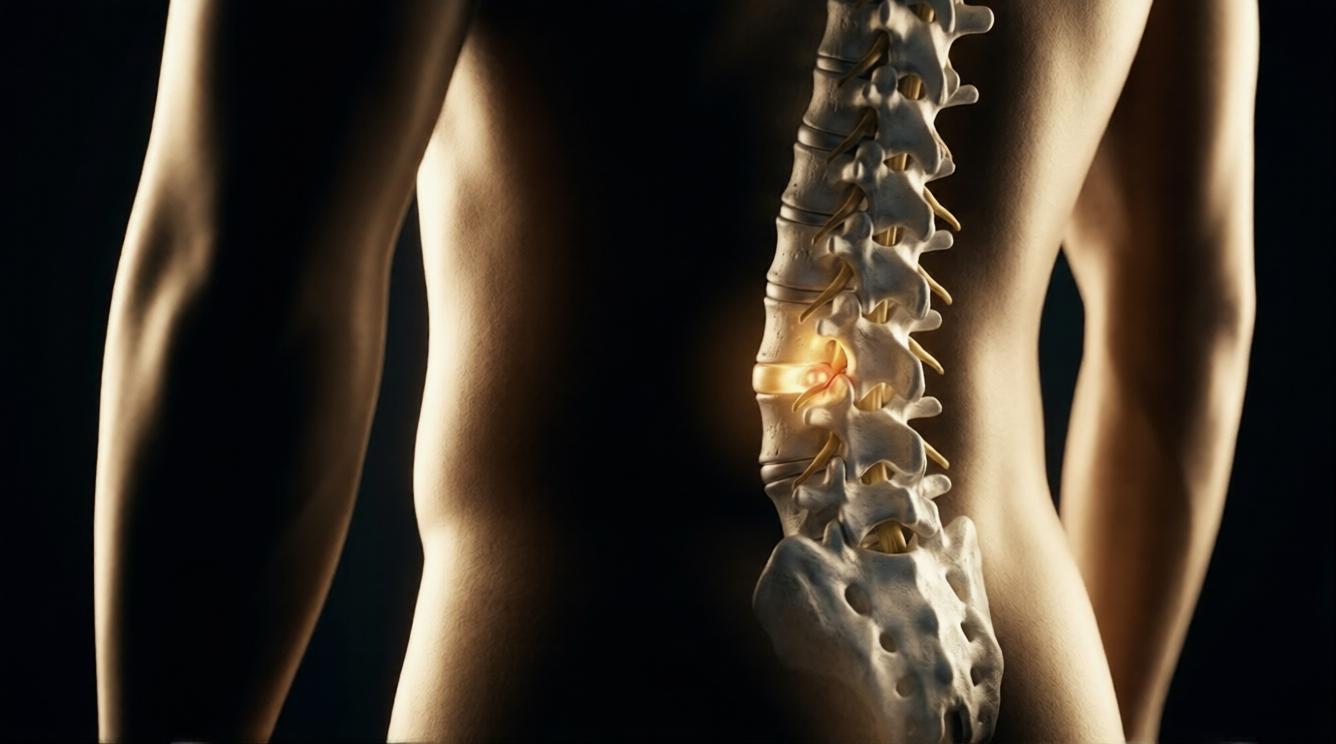
A herniated disc occurs when the soft inner core of a spinal disc pushes through a tear in its outer ring, often pressing against nearby nerves and causing pain, numbness, or weakness that radiates into the arms or legs.
The condition sounds alarming, but most people recover without surgery. This guide covers how herniated discs are diagnosed, which conservative treatments work, what to expect during recovery, and when surgery actually becomes necessary.
What is a herniated disc
Most people with a herniated disc heal without surgery. The body can reabsorb the protruding disc material over time, and conservative treatments work by calming nerve inflammation and strengthening the spine while that natural healing takes place.
So what exactly is happening in your spine? Each spinal disc has two parts: a soft, gel-like center called the nucleus pulposus, and a tougher outer ring called the annulus fibrosus. A herniation occurs when the inner gel pushes through a tear in that outer ring. This differs from a bulging disc, where the outer ring stretches outward but stays intact.
Herniations happen most often in two places: the lumbar spine (lower back) and the cervical spine (neck). Both regions bear considerable mechanical stress during everyday movement, which makes them more vulnerable to wear and injury over time.
What causes disc herniation and nerve pain
Disc herniation usually develops from age-related degeneration, repetitive strain, improper lifting, or direct trauma. As discs lose water content with age, they become less flexible and more prone to tearing.
The pain itself comes from compression. When herniated disc material presses against a nearby spinal nerve, it triggers radiating pain, numbness, or tingling. In the lumbar spine, this often produces sciatica, where pain travels down the leg. In the cervical spine, symptoms may radiate into the shoulder, arm, or hand.
Here’s something worth noting: mechanical dysfunction in one spinal region frequently connects to problems elsewhere. That’s why a thorough evaluation considers the whole body rather than treating symptoms in isolation.
How a herniated disc is diagnosed
Accurate diagnosis comes first. A physical examination assesses reflexes, muscle strength, and sensation to identify which nerve roots may be affected. From there, imaging and nerve testing confirm disc involvement and rule out other causes.
MRI and CT imaging
MRI provides detailed images of soft tissue, including the disc material and any nerve compression. CT scans offer clearer views of bone structure and work well when MRI is not an option. Both are non-invasive and help guide treatment planning.
X-rays and myelogram
X-rays rule out fractures or structural abnormalities but do not show soft disc tissue. A myelogram uses contrast dye injected into the spinal canal to visualize the spinal cord and nerve roots, typically when MRI is contraindicated.
EMG and nerve conduction studies
An electromyogram (EMG) measures the electrical activity of muscles to detect nerve damage. Nerve conduction studies assess how well electrical signals travel through peripheral nerves. Together, they pinpoint which nerve roots are affected and how severely.
Can a herniated disc heal without surgery
Yes. The body naturally reabsorbs protruding disc material over weeks to months. During this process, conservative treatments reduce pain, support function, and allow healing to proceed.
Surgery is reserved for cases where conservative care fails or severe neurological deficits develop. Most patients never reach that point with proper treatment.
Non surgical treatment options for a herniated disc
Several therapies reduce pain, support natural healing, and restore function without invasive procedures. The right combination depends on your specific diagnosis.
Physical therapy and the McKenzie method
Physical therapy strengthens the core muscles, including the back, abdomen, upper thighs, and buttocks, to stabilize the spine and reduce disc pressure. This is often the first-line conservative treatment.
The McKenzie method uses directional preference exercises to centralize pain. Centralization means symptoms move from the leg or arm back toward the spine, which typically indicates a favorable response to conservative care.
Chiropractic manipulation and mobilization
Spinal manipulation and joint mobilization techniques restore proper spinal mechanics and reduce nerve irritation. However, identifying the root cause of dysfunction is essential before any hands-on treatment begins.
A diagnostic-first approach ensures that manipulation addresses the actual problem rather than temporarily relieving symptoms.
Acupuncture and dry needling
Acupuncture uses thin needles at specific points to modulate pain signals and reduce muscle tension. Dry needling targets trigger points in tight muscles that may be contributing to spasm around the affected disc. Both can complement other conservative treatments.
Extracorporeal shockwave therapy
Extracorporeal shockwave therapy (ESWT) delivers high-energy mechanical waves to affected tissue. This stimulates blood flow, promotes tissue repair, and reduces inflammation. ESWT is non-invasive and performed on an outpatient basis, typically over several sessions.
Spinal decompression therapy for herniated and bulging discs
Spinal decompression uses mechanical traction to gently stretch the spine. This creates negative pressure within the disc, encouraging herniated material to retract toward the disc center.
The process also promotes something called imbibition, which is the exchange of nutrients and fluid into disc tissue. Healthy discs depend on this pumping mechanism to stay hydrated and resilient.
Here’s how it works:
- Negative pressure: draws herniated material back toward the disc center
- Imbibition: promotes nutrient and hydration exchange into disc tissue
- Nerve relief: reduces compression on spinal nerves
This approach addresses the underlying mechanical cause rather than masking symptoms with medication alone.
Regenerative therapy for damaged disc tissue
Regenerative therapy uses stem cell-based approaches to repair damaged tissue rather than simply mask pain. Stem cells are collected from sources such as bone marrow, adipose tissue, or umbilical cord blood, then processed and injected into the affected area using image guidance for precise placement.
Treating the whole body is solely dependent upon having an intimate understanding of each of its individual parts. Mechanical dysfunction of non-traumatic origin is practically certain to cause — or be caused by — dysfunction in another region.
— Dr. Amin JavidThis is a minimally invasive alternative for patients seeking to avoid or delay surgery. Outcomes depend on the severity of damage and the patient’s overall health.
Medications and injections for herniated disc pain
Medications manage pain and inflammation while the body heals. They are not a cure but can support function during recovery.
NSAIDs and muscle relaxants
Nonsteroidal anti-inflammatory drugs (NSAIDs) such as ibuprofen and naproxen reduce swelling around compressed nerves. Muscle relaxants help address painful spasms that often accompany disc injuries. Both are typically first-line pharmacological options.
Oral corticosteroids
Short courses of oral steroids can reduce severe inflammation when NSAIDs alone are insufficient. Potential side effects limit their long-term use.
Epidural steroid injections
An epidural injection delivers corticosteroid directly into the epidural space near affected nerve roots. This provides a targeted anti-inflammatory effect.
One thing to understand: epidural injections reduce inflammation but do not shrink the herniated disc itself. They are often used when oral medications fail to provide adequate relief.
At home self care to support herniated disc recovery
Practical self-care supports clinical treatment and accelerates recovery. Here’s what helps.
Activity modification and posture correction
Avoiding heavy lifting and prolonged sitting reduces strain on the injured disc. At the same time, staying mobile prevents joint stiffness and muscle deconditioning.
Posture during sitting, standing, and sleeping matters more than most people realize. Poor posture increases disc strain and can slow healing.
Heat, ice, and topical pain relief
Ice applied during the first 48 hours reduces acute inflammation. After that initial period, heat relaxes muscles and improves blood flow to the area.
Topical options such as physician-formulated balms can provide additional relief for muscle soreness and inflammation without systemic side effects.
Weight management and anti-inflammatory nutrition
Excess body weight increases the load on spinal discs. Maintaining a healthy weight reduces mechanical stress during recovery. Anti-inflammatory foods, including fatty fish, leafy greens, and berries, may support the healing process.
Recovery timeline for a herniated disc without surgery
Most patients experience improvement within several weeks to a few months with consistent conservative care. Individual timelines vary based on severity, adherence to treatment, and overall health.
| Phase | What to expect |
| Acute (first weeks) | Pain management, rest with gentle movement, inflammation control |
| Subacute (weeks to months) | Progressive physical therapy, return to modified activities |
| Recovery (ongoing) | Strengthening, posture habits, prevention strategies |
Setting realistic expectations helps patients stay committed to their treatment plan through the full recovery process.
When herniated disc surgery becomes necessary
Surgery is reserved for cases where conservative care fails after several months or when severe neurological deficits occur.
Red flag symptoms that require immediate evaluation include:
- Bowel or bladder dysfunction
- Progressive weakness in the legs or arms
- Loss of coordination
Most patients with herniated discs do not reach this point when they receive proper non-surgical care early in the process.
Book a non surgical spine evaluation in Beverly Hills
A comprehensive spinal evaluation identifies the root cause of your symptoms and guides a personalized treatment plan. At Beverly Hills Spine & Rehabilitation, Dr. Amin Javid combines diagnostic precision with advanced non-surgical therapies, including spinal decompression, extracorporeal shockwave therapy, and regenerative medicine.
Learn more about disc treatment services
FAQs about non surgical herniated disc treatment
Can you live with a herniated disc without surgery?
Yes, most people with a herniated disc manage symptoms successfully with conservative treatment and lifestyle modifications. Many herniated discs improve as the body naturally reabsorbs the protruding material over time.
Will my back ever be the same after a herniated disc?
Many patients return to normal function after proper treatment and rehabilitation. Some may benefit from ongoing attention to posture, core strength, and activity modification to prevent recurrence.
How long does it take for nerves to heal after a herniated disc?
Nerve healing varies by individual and depends on the degree of compression and how quickly treatment begins. Most patients notice gradual improvement over weeks to months as inflammation subsides and the disc heals.
How do you fix a bulging disc in the lower back without surgery?
Non-surgical options include physical therapy, spinal decompression, chiropractic care, medications, and epidural injections. Each approach reduces inflammation and supports the body’s natural healing process.
