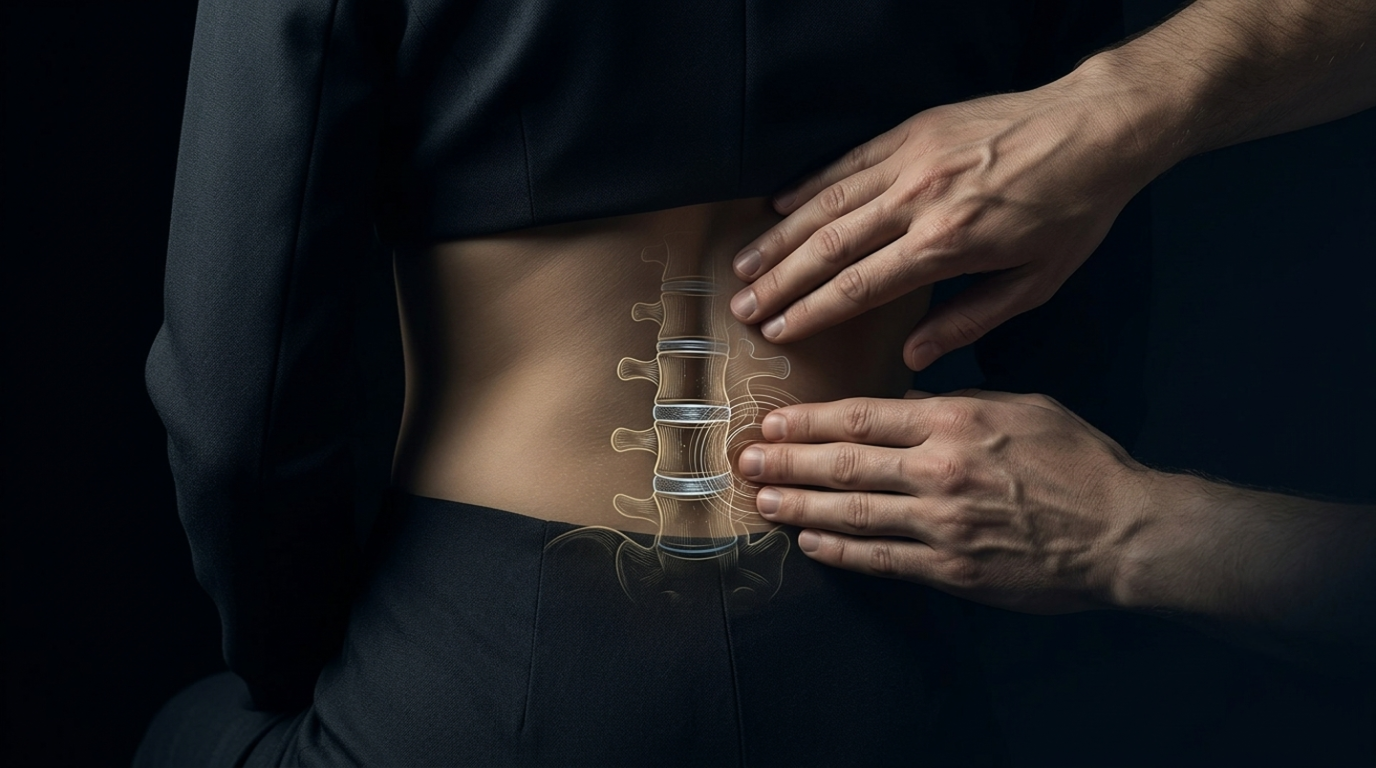
Back pain sends more people to the doctor than almost any other complaint, and most of them leave with the same question: do I really need surgery? The answer, for the majority of patients, is no.
Non invasive treatment offers a path forward that doesn’t involve incisions, anesthesia, or weeks of recovery. This guide covers seven conservative options that address the root cause of back pain, explains who benefits most from each, and clarifies when escalation becomes necessary.
What non invasive back pain treatment means
Non invasive back pain treatment focuses on conservative and lifestyle therapies to promote healing without surgery. There are no incisions, no anesthesia, and no hospital stay involved. Instead, treatment works from outside the body to influence what’s happening inside, whether that’s a compressed nerve, an inflamed joint, or a muscle that won’t release.
The word “conservative” comes up a lot in spine care, and it simply means starting with the least aggressive option first. Physical therapy, chiropractic adjustment, and spinal decompression all qualify because they address the problem without cutting into tissue. You might be surprised how often the body can heal itself when given the right conditions.
Common causes of chronic back pain
Before picking a treatment, you have to know what’s actually causing the pain. A herniated disc and a strained muscle can feel similar, but they respond to completely different interventions. Getting the diagnosis right is the first step.
Herniated and bulging discs
A spinal disc sits between each vertebra and acts like a cushion. When the soft inner material pushes through the outer layer, it’s called a herniation. If that material presses on a nearby nerve, you’ll often feel sharp pain that travels down your leg or arm.
Sciatica and lumbar radiculopathy
Radiculopathy is a clinical term for nerve root irritation. When it happens in the lower back, the sciatic nerve gets involved, and that’s where the name “sciatica” comes from. The hallmark symptoms are radiating leg pain, numbness, tingling, or weakness that follows a specific path down the leg.
Spinal stenosis
Spinal stenosis refers to narrowing of the spinal canal. As the canal gets tighter, it puts pressure on the spinal cord or the nerve roots exiting the spine. Symptoms tend to develop gradually and often get worse with standing or walking.
Facet joint dysfunction
Facet joints are the small joints that connect each vertebra to the one above and below it. When they become inflamed or arthritic, they cause localized stiffness and aching. The pain typically gets worse when you extend or rotate your spine.
Muscle strain and postural imbalance
Soft tissue problems are easy to overlook, but they matter. A muscle strain might seem minor on its own, yet chronic postural imbalance places ongoing stress on discs and joints. Over time, that stress adds up.
Why accurate diagnosis comes before treatment
Here’s something that surprises a lot of patients: mechanical dysfunction in one region of the body often connects to problems somewhere else. A tight hip flexor can change how your lumbar spine moves. A weak core can overload your lower back. If you only treat the spot that hurts, you might miss the actual source.
This is why imaging alone doesn’t tell the whole story. An MRI might show a disc bulge, but that bulge may not be the pain generator. Plenty of people walk around with disc abnormalities on imaging and feel perfectly fine. A thorough clinical exam helps determine whether the disc, a facet joint, or a muscular imbalance is actually driving your symptoms.
At Beverly Hills Spine & Rehabilitation, Dr. Javid uses his background as a medical illustrator to show patients exactly what’s happening in their spine. Seeing the anatomy makes it easier to understand why a specific treatment plan makes sense for your particular condition.
7 non invasive treatments for back pain relief
Each of the following options addresses a different aspect of spinal health. Some patients do well with one approach, while others benefit from combining several. The right mix depends on your diagnosis.
1. Chiropractic adjustment and manual therapy
Spinal manipulation applies controlled force to joints that aren’t moving properly. The goal is restoring mobility and reducing nerve interference. Most chiropractors combine adjustments with soft tissue work to address muscle tension that contributes to misalignment.
Chiropractic care tends to work well for facet joint dysfunction, certain disc problems, and postural imbalances. When your spine moves better, the mechanical stress that causes pain often decreases.
2. Spinal decompression therapy
Spinal decompression uses motorized traction to gently stretch the spine. The stretching creates negative pressure within the disc, which can help retract herniated material and improve nutrient flow to damaged tissue.
- Best for: Herniated discs, bulging discs, and sciatica
- Session length: Typically 20–30 minutes
- Treatment course: Multiple sessions over several weeks
Decompression is passive, meaning you lie on a table while the machine does the work. It’s a good option for patients who can’t tolerate more active treatments during an acute flare.
3. Physical therapy and corrective exercise
Physical therapy identifies weak links in your movement patterns and builds a program to address them. A therapist might find that your glutes aren’t firing properly, or that your thoracic spine is too stiff, and both issues can contribute to lower back pain.
The exercises matter, but so does the education. Learning how to move, sit, and lift properly helps prevent the problem from coming back once your symptoms improve.
4. Extracorporeal shockwave therapy
Extracorporeal shockwave therapy (ESWT) delivers acoustic waves to damaged tissue. The waves stimulate blood flow and cellular repair, which can help chronic soft tissue pain that hasn’t responded to other treatments.
ESWT is performed in-office and typically requires a series of sessions. Response varies by condition, though some patients notice improvement within a few weeks.
5. Hyperbaric oxygen therapy
Hyperbaric oxygen therapy (HBOT) places you in a pressurized chamber where you breathe concentrated oxygen. Under pressure, your blood carries more oxygen to tissues throughout the body, which supports healing at the cellular level.
HBOT is often used as an adjunct therapy, meaning it works alongside other treatments rather than replacing them. Patients dealing with slow-healing injuries or chronic inflammation may find it helpful.
6. Acupuncture and dry needling
Acupuncture involves inserting thin needles at specific points to influence pain signaling and promote relaxation. Dry needling is different: it targets trigger points, which are tight bands of muscle that refer pain to other areas.
Both approaches address muscle tension and work well for patients whose pain has a soft tissue component. They’re typically used alongside other treatments rather than as standalone therapies.
Treating the whole body is solely dependent upon having an intimate understanding of each of its individual parts. Mechanical dysfunction of non-traumatic origin is practically certain to cause — or be caused by — dysfunction in another region.
— Dr. Amin Javid7. Regenerative therapy for soft tissue healing
Regenerative therapies use the body’s own healing mechanisms to repair damaged tissue. The goal is stimulating cellular repair in areas where degeneration or injury has occurred.
Regenerative therapy represents an advanced conservative option. It’s worth considering for patients who want to avoid surgery but haven’t found relief from other non invasive approaches.
|
Treatment |
Best for | How it works |
| Chiropractic adjustment | Joint restriction, nerve interference |
Restores spinal alignment and mobility |
|
Spinal decompression |
Herniated discs, sciatica | Reduces disc pressure through traction |
| Physical therapy | Weakness, instability |
Strengthens muscles, corrects movement |
|
Shockwave therapy |
Chronic soft tissue pain | Acoustic waves stimulate tissue repair |
| Hyperbaric oxygen | Inflammation, slow healing |
Oxygen under pressure aids cell recovery |
| Acupuncture/dry needling | Muscle tension, trigger points |
Releases tight tissue, modulates pain |
| Regenerative therapy | Tissue damage, degeneration |
Supports natural tissue repair |
Non invasive vs minimally invasive vs surgical back pain care
People often confuse non invasive with non surgical, so let’s clarify the difference.
- Non invasive: No incisions and no needles penetrating deep tissue. Chiropractic care, physical therapy, and spinal decompression all fall here.
- Minimally invasive: Small incisions or needle-based procedures performed under imaging guidance. Epidural steroid injections and nerve ablation are examples.
- Surgical: Open or endoscopic procedures requiring anesthesia and recovery time. Spinal fusion and laminectomy are common surgical options.
Many patients move through these levels only if conservative care doesn’t provide adequate relief. Starting with non invasive options makes sense because they carry the lowest risk.
Who is a good candidate for non invasive back pain care
Non invasive treatment tends to work well for patients who fit a certain profile:
- Persistent or recurring back pain that hasn’t improved with rest or over-the-counter medication
- Radiating symptoms like leg pain, numbness, or tingling that suggest nerve involvement
- Preference for conservative care before considering injections or surgery
- Interest in understanding the root cause rather than masking symptoms with medication
A comprehensive evaluation determines whether non invasive treatment is appropriate for your specific diagnosis. Not every condition responds to conservative care, but many do.
When non invasive back pain treatment is not enough
Some conditions require escalation beyond conservative care. Red flags include progressive neurological deficits (worsening weakness or numbness), loss of bladder or bowel control, and severe structural instability. If any of those apply, more aggressive intervention may be necessary.
That said, most patients respond well to non invasive treatment when the diagnosis is accurate and the treatment plan is individualized. Honesty about limits matters, though. If conservative care isn’t producing results after a reasonable trial, minimally invasive or surgical options may be appropriate.
Schedule a non invasive back pain evaluation in Beverly Hills
A comprehensive spinal evaluation can help determine the cause of your pain and whether non invasive treatment is right for you. Dr. Javid provides individualized assessments at Beverly Hills Spine & Rehabilitation, combining clinical examination with patient education so you understand your options.
Learn more about back pain treatment services
Frequently asked questions about non invasive back pain treatment
How long does non invasive back pain treatment take to show results?
The timeline depends on your diagnosis and how severe the condition is. Many patients notice improvement within a few weeks of consistent treatment, though chronic conditions may take longer to respond.
Is spinal decompression therapy covered by insurance?
Coverage varies by plan and diagnosis. Verifying benefits with your insurer before starting treatment helps avoid unexpected costs.
Can non invasive treatment heal a herniated disc?
Disc tissue may not fully regenerate, but treatments like decompression and physical therapy can reduce symptoms and restore function. Many herniated discs improve without surgery.
What is the difference between non invasive and non surgical back pain treatment?
Non surgical includes both non invasive methods and minimally invasive procedures like injections. Non invasive specifically means no incisions or needle penetration into deep tissue.
How often does someone see a chiropractor for chronic back pain?
Frequency depends on the condition and treatment phase. Initial care may involve multiple visits per week, tapering as symptoms improve and stability increases.
