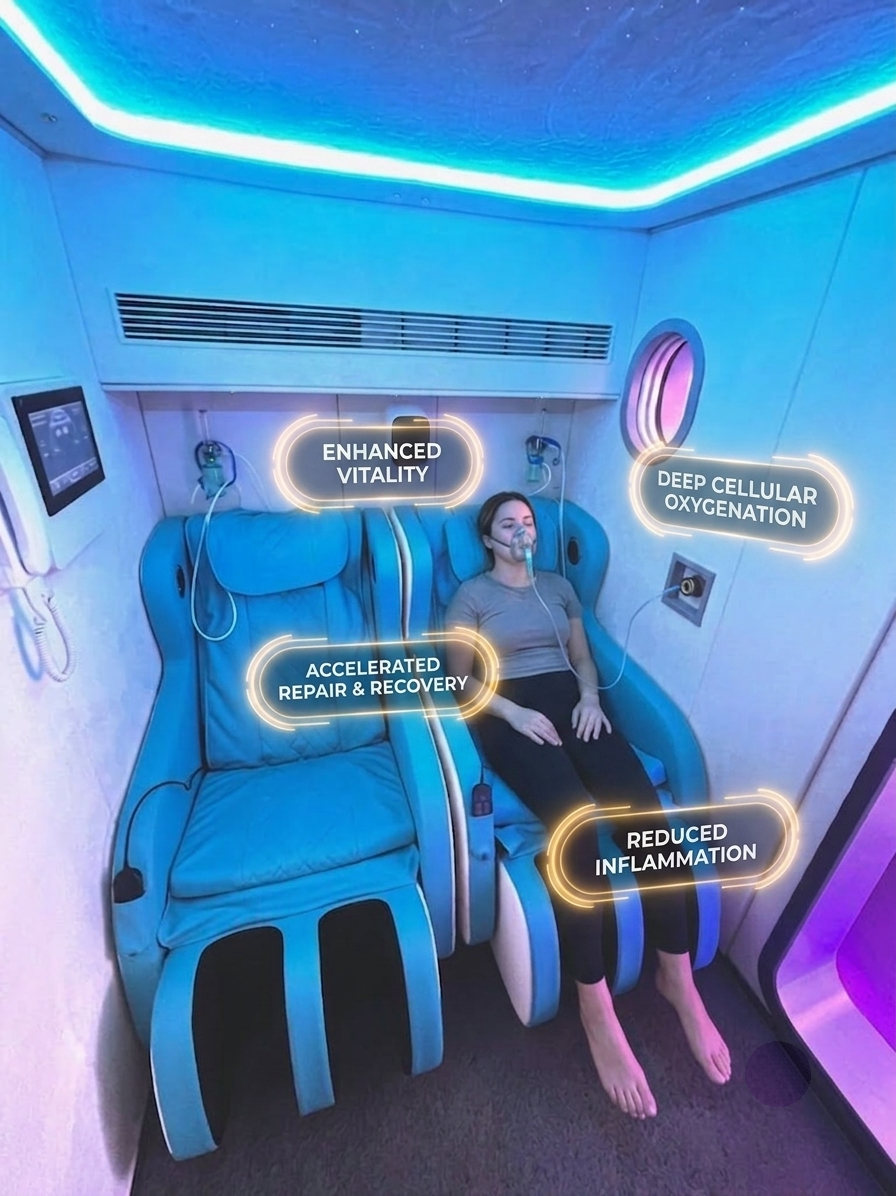
Hyperbaric oxygen therapy costs anywhere from $100 to $650 per session, with full treatment protocols running between $1,500 and over $10,000. That range is wide enough to make anyone pause before booking an appointment.
Whether HBOT makes financial sense depends on your specific condition, the type of chamber used, and whether insurance will cover any portion of the cost. This guide breaks down what drives pricing, which benefits are backed by evidence, and how to evaluate whether the investment fits your situation.
What Is Hyperbaric Oxygen Therapy
Hyperbaric oxygen therapy (HBOT) sessions typically cost between $100 and $650 per session, with complete treatment protocols ranging from $1,500 to over $10,000. The therapy involves breathing pure oxygen inside a pressurized chamber at atmospheric pressures higher than sea level. This is a medical treatment with specific FDA-cleared indications, and it works differently than home oxygen concentrators or the soft-shell wellness chambers you might see advertised online.
The pressure inside HBOT chambers is measured in atmospheres absolute, or ATA. Medical-grade chambers typically operate between 1.5 and 3.0 ATA, while soft-shell units max out around 1.3 ATA. That pressure difference matters quite a bit when we talk about which conditions actually respond to treatment.
How Hyperbaric Oxygen Therapy Works
Under normal conditions, oxygen travels through your bloodstream attached to red blood cells. When you breathe pure oxygen under increased pressure, something different happens. Oxygen dissolves directly into your blood plasma, cerebrospinal fluid, and other body fluids.
This plasma-dissolved oxygen can reach tissues that red blood cells struggle to access, particularly areas with compromised circulation or damaged blood vessels. During a typical session, you recline in the chamber while pressure increases gradually over several minutes. The treatment portion lasts 60–90 minutes, followed by a gradual return to normal pressure.
Key Benefits of Hyperbaric Oxygen Therapy
HBOT produces several documented physiological effects that explain why clinicians use it for specific conditions.
Faster Wound and Tissue Healing
Elevated oxygen promotes cell regeneration and stimulates angiogenesis, which is the formation of new blood vessels in damaged tissue. This is particularly relevant for diabetic ulcers, surgical wounds, and tissue damaged by radiation therapy. The increased oxygen availability gives cells the energy they need to repair themselves.
Reduced Inflammation and Swelling
Oxygen saturation can reduce edema and inflammatory markers in injured areas. For patients dealing with post-surgical swelling or chronic inflammatory conditions, this anti-inflammatory effect often provides noticeable relief within the first several sessions.
Improved Neurological Recovery
HBOT may benefit brain and nerve tissue by improving oxygenation in areas with compromised blood flow. Clinicians have observed this in stroke recovery, traumatic brain injury rehabilitation, and certain neuropathies where nerve tissue is oxygen-starved.
Enhanced Athletic Recovery and Performance
In off-label wellness settings, athletes use HBOT to reduce muscle fatigue and accelerate recovery between training sessions. Professional sports teams have incorporated hyperbaric chambers into their recovery protocols, though this application falls outside FDA-approved indications.
Stronger Immune and Anti-Infection Response
Elevated oxygen enhances white blood cell function and directly inhibits certain anaerobic bacteria that thrive in low-oxygen environments. This makes HBOT valuable for chronic infections and wound complications that resist conventional treatment.
Conditions Treated With Hyperbaric Oxygen Therapy
The distinction between on-label and off-label conditions directly affects whether insurance will cover your treatment. On-label conditions have FDA clearance, while off-label uses are still being studied or lack sufficient evidence for regulatory approval.
FDA-Approved On-Label Conditions
- Diabetic foot ulcers and non-healing wounds
- Decompression sickness (the bends)
- Carbon monoxide and cyanide poisoning
- Radiation tissue damage (delayed radiation injury)
- Gas gangrene and necrotizing soft tissue infections
- Severe anemia when transfusion is not possible
- Compromised skin grafts and flaps
Off-Label and Wellness Applications
- Long COVID symptoms
- Traumatic brain injury and concussion recovery
- Chronic fatigue and fibromyalgia
- Athletic performance and recovery optimization
Off-label uses typically require self-pay regardless of clinical merit.
How Much Does Hyperbaric Therapy Cost
Per-session pricing varies substantially based on where you receive treatment. Here is what you can expect at different facility types:
|
Provider Type |
Per-Session Cost (aprox) |
Notes |
|
Hospital-based wound centers |
$300–$600+ |
Often insurance-billable for on-label conditions |
|
Freestanding medical clinics |
$150–$400 |
Physician-supervised, medical-grade chambers |
| Wellness and longevity centers |
$100–$350 |
Often cash-pay, may use lower-pressure protocols |
| Home chamber rentals | $50–$100 |
Soft-shell only, limited therapeutic pressure |
Your total investment depends on both the per-session cost and how many sessions your condition requires. A 40-session protocol at $250 per session adds up to $10,000, while a 10-session course at the same rate totals $2,500.
Factors That Affect Hyperbaric Oxygen Therapy Pricing
Understanding what drives pricing helps you anticipate costs and compare providers meaningfully.
On-Label Versus Off-Label Use
FDA-approved conditions may qualify for insurance coverage, and Medicare covers specific indications including diabetic wounds and radiation injury. Off-label uses are almost always self-pay. Even if your physician believes HBOT will help your condition, insurance companies follow FDA approval status when making coverage decisions.
Chamber Type and Pressure Rating
Hard-shell monoplace or multiplace chambers reach therapeutic pressures of 2.0–3.0 ATA. Soft-shell portable units are limited to approximately 1.3 ATA. Medical-grade chambers cost more to operate, but they deliver the pressures required for most clinical protocols. If a facility advertises unusually low prices, ask what type of chamber they use.
Treating the whole body is solely dependent upon having an intimate understanding of each of its individual parts. Mechanical dysfunction of non-traumatic origin is practically certain to cause — or be caused by — dysfunction in another region.
— Dr. Amin JavidClinic Location and Physician Oversight
Hospital-based programs typically charge more than freestanding clinics due to facility overhead. Physician-supervised facilities may cost more than technician-only operations, but they provide appropriate medical oversight for complex conditions.
Severity of the Condition and Number of Sessions
More severe or chronic conditions require longer treatment courses, multiplying your total investment. A non-healing diabetic wound may need 40 or more sessions, while acute decompression sickness might resolve in fewer than 10.
How Many HBOT Sessions Are Needed
Treatment protocols vary substantially by condition and individual response.
- Acute conditions: Shorter protocols, sometimes 5–10 sessions for poisoning or decompression sickness
- Chronic wounds: Extended courses, often 20–40 daily sessions over several weeks
- Neurological recovery: Variable protocols, often repeated courses with reassessment between them
- Wellness and performance: Typically 10–20 session maintenance protocols
Your treating physician will recommend a protocol based on your specific condition, then adjust based on how you respond.
Does Insurance Cover Hyperbaric Oxygen Therapy
Medicare and most private insurers cover only FDA-approved on-label conditions with documented medical necessity. You will need prior authorization, and the treating facility will need to submit documentation supporting the diagnosis.
Off-label uses such as long COVID, TBI, and athletic recovery typically require self-pay. Some clinics offer payment plans or package pricing that reduces the per-session cost for patients paying out of pocket. Before starting treatment, verify coverage with both your insurer and your provider.
Side Effects and Risks of Hyperbaric Oxygen Therapy
Most side effects are mild and temporary. Common experiences include ear pressure or discomfort similar to air travel, temporary nearsightedness that resolves after treatment ends, and mild fatigue after sessions.
Less common effects include sinus pressure and claustrophobia in enclosed chambers. Rare serious risks include oxygen toxicity seizures and barotrauma to ears or lungs, though qualified medical supervision with appropriate patient screening significantly reduces the likelihood of complications.
Is Hyperbaric Oxygen Therapy Worth the Cost
The value calculation depends on your specific situation. Here are the factors worth considering:
- Condition severity: How much is your condition affecting your quality of life and daily function?
- Evidence strength: Is there solid clinical evidence for HBOT treating your specific condition?
- Alternative costs: What have you already spent on treatments that have not worked?
- Insurance coverage: Will your insurer cover any portion of the cost?
- Cost of inaction: What happens if you leave the condition untreated?
For FDA-approved conditions with strong evidence, the investment often makes clinical and financial sense. For experimental uses, weigh the limited evidence against cost and discuss options with a knowledgeable physician who can give you realistic expectations.
How to Choose a Qualified HBOT Provider
Not all HBOT facilities offer the same level of care. Here is what to look for.
Verify Physician Supervision
Look for clinics with direct physician oversight of treatment protocols. Facilities run solely by technicians without medical direction may not be equipped to handle complications or adjust protocols for complex cases.
Confirm Chamber Type and ATA Pressure
Ensure the facility uses medical-grade hard-shell chambers capable of reaching therapeutic pressure levels. Ask specifically what pressure protocol they use for your condition.
Ask About Diagnostic Workup and Treatment Plan
Quality providers assess your condition thoroughly before recommending HBOT. They create individualized treatment protocols rather than offering the same package to everyone who walks through the door.
Review Outcomes for Your Specific Condition
Ask about the provider’s experience treating your particular condition. Established facilities can discuss their clinical approach and give you realistic expectations about outcomes.
How HBOT Fits With Other Non-Surgical Treatments
HBOT works well as part of a comprehensive treatment plan rather than a standalone solution. The therapy can complement physical rehabilitation, regenerative medicine approaches, and wound care protocols.
For musculoskeletal and neurovascular conditions, an integrated approach addressing multiple factors often produces better outcomes than any single treatment alone. This is particularly true when mechanical dysfunction contributes to the problem. Addressing the root cause while supporting tissue healing with HBOT creates conditions for lasting improvement.
Evaluating Hyperbaric Oxygen Therapy With a Beverly Hills Specialist
A thorough clinical evaluation determines whether HBOT is appropriate for your specific condition and goals. For patients with complex musculoskeletal, neuropathic, or recovery needs, an integrated treatment plan may combine HBOT with other evidence-based modalities.
Consulting a physician experienced in biomechanics and regenerative approaches helps ensure treatment recommendations address root causes rather than symptoms alone. At 90210doc, we evaluate each patient’s condition comprehensively before recommending any treatment protocol.
Frequently Asked Questions About Hyperbaric Oxygen Therapy Price and Benefits
How much do 12 hours in a hyperbaric chamber cost?
Extended or intensive protocols cost more than standard sessions. If your protocol calls for 12 hours of total treatment time (typically delivered as multiple 90-minute sessions), expect to pay between $1,200 and $7,200 depending on the facility type. Request detailed pricing for your specific recommended protocol before committing.
Can hyperbaric oxygen therapy help ADHD?
HBOT for ADHD is an off-label application with limited published evidence. Some practitioners report improvements in focus and cognitive function, but controlled trials are lacking. Consult a physician experienced in both HBOT and neurodevelopmental conditions before pursuing treatment.
Is buying a personal hyperbaric chamber cheaper than clinic sessions over time?
Home chambers are typically soft-shell units that cannot reach the therapeutic pressures of medical-grade hard chambers. For conditions requiring higher pressures (most FDA-approved indications), clinic-based treatment under supervision remains necessary. Home units may work for mild wellness applications, but they are not interchangeable with medical HBOT.
How much does oxygen therapy cost compared to hyperbaric oxygen therapy?
Standard supplemental oxygen therapy (home concentrators or portable tanks) treats different conditions than HBOT and costs significantly less, often $100–$300 per month for equipment rental. HBOT requires specialized pressurized chambers and treats conditions where pressure-enhanced oxygen delivery provides therapeutic benefit beyond simple supplementation.
How quickly will I notice benefits from hyperbaric oxygen therapy?
Response time varies by condition and individual. Some patients report improvement within the first several sessions, while others require completion of a full treatment course before noticing measurable benefit. Your physician can give you realistic expectations based on your specific condition
