A sprained ankle that sidelines you for weeks. A muscle strain that lingers longer than it should. These injuries share a common problem: damaged tissue needs oxygen to heal, and swelling often cuts off the supply right when it matters most.
Hyperbaric oxygen therapy (HBOT) addresses this directly by saturating your blood with oxygen under pressure, delivering it to injured areas even when normal circulation is compromised. This article covers how HBOT works, which sports injuries respond to it, what a treatment session looks like, and how athletes combine it with other therapies for faster recovery.
What is hyperbaric oxygen therapy for sports injuries
Hyperbaric oxygen therapy (HBOT) accelerates the healing of sports injuries by flooding tissues with concentrated oxygen. This reduces swelling, suppresses inflammation, and promotes the growth of new blood vessels. The treatment takes place inside a pressurized chamber where you breathe pure oxygen at 1.5 to 3 times normal atmospheric pressure.
Under these conditions, your blood plasma absorbs far more oxygen than it could at sea level. The term “hyperoxygenation” describes this state of elevated oxygen in the bloodstream. When oxygen-rich plasma reaches injured muscles, tendons, or ligaments, it provides the fuel cells require to rebuild damaged tissue.
HBOT was originally developed to treat decompression sickness in divers. Today, the therapy is used for wound healing, infection control, and tissue repair across many medical specialties, including sports medicine.
How HBOT works to heal sports injuries and speed recovery
At normal pressure, oxygen binds almost exclusively to hemoglobin in red blood cells. When you sit in a pressurized chamber breathing pure oxygen, something different happens. The oxygen dissolves directly into your blood plasma, allowing it to travel to areas where circulation is compromised by swelling or injury.
Once this oxygen reaches damaged tissue, several repair processes activate:
- Increased oxygen saturation: Plasma oxygen levels can rise 10 to 15 times above normal, saturating tissues that would otherwise remain oxygen-starved.
- Enhanced tissue perfusion: Oxygen bypasses blocked or constricted vessels, reaching the injury site even when local blood flow is limited.
- Cellular repair activation: Fibroblasts (the cells that produce collagen) and immune cells require oxygen to function, so higher oxygen availability accelerates their work.
- Edema reduction: Blood vessels constrict slightly under pressure, which reduces fluid leakage into tissues while maintaining oxygen delivery.
The combination of reduced swelling and increased oxygen creates conditions where healing can proceed faster than it would otherwise.
Why top athletes use hyperbaric oxygen therapy
Professional and elite athletes have adopted HBOT as part of their recovery protocols. Here is why the therapy has gained traction in sports medicine.
1. Faster muscle and tissue recovery
Oxygen availability is often the rate-limiting factor in muscle repair after intense training. Your muscles break down during hard workouts, and rebuilding them requires cellular energy. HBOT saturates tissue with oxygen, supporting faster turnover of damaged muscle fibers and reducing downtime between training sessions.
2. Accelerated healing from acute injuries
Acute soft tissue injuries like sprains, strains, and contusions benefit from immediate oxygen delivery. The sooner oxygen reaches the injury site, the sooner repair can begin. Athletes who begin HBOT soon after injury often experience shorter timelines from injury to return to play.
3. Enhanced athletic performance and endurance
Improved mitochondrial efficiency and oxygen utilization can support performance even in uninjured athletes. Some athletes use HBOT proactively as part of training recovery rather than waiting for an injury to occur.
4. Reduced inflammation and cytokine response
Cytokines are signaling proteins involved in inflammation. While acute inflammation is part of healing, chronic elevation of inflammatory markers delays recovery. HBOT modulates this response, helping the body move from the inflammatory phase into the repair phase more efficiently.
5. Improved mitochondrial function and energy output
Mitochondria are the energy-producing structures within cells. They require oxygen to generate ATP (adenosine triphosphate), which is the molecule your cells use for energy. HBOT supports mitochondrial function, which translates to better cellular energy production during recovery.
6. Lower reinjury risk during return to play
Better-quality tissue repair, including stronger collagen formation and more complete healing, reduces the likelihood of reinjury when athletes resume activity. This is particularly relevant for ligament and tendon injuries where incomplete healing often leads to chronic problems.
Sports injuries treated with hyperbaric oxygen therapy
HBOT has been studied for a range of musculoskeletal and neurological sports injuries. The therapy is particularly useful for injuries where blood supply is limited or where swelling restricts oxygen delivery.
Delayed onset muscle soreness and muscle strains
Delayed onset muscle soreness (DOMS) is the stiffness and pain that develops 24 to 72 hours after intense exercise. You know the feeling: you do a hard leg workout, and two days later you can barely walk down stairs. HBOT may reduce the duration and severity of DOMS while supporting healing of muscle fiber tears that occur during strenuous activity.
Ankle sprains and acute ligament injuries
Ankle sprains involve damage to the ligaments that stabilize the joint. Swelling often restricts normal blood flow to the injury site, creating a catch-22 where the tissue that needs oxygen the most receives the least. HBOT supports ligament healing by reducing edema and delivering oxygen to hypoxic tissue at the injury site.
ACL and MCL knee ligament tears
Ligaments have limited blood supply compared to muscles, making oxygen delivery challenging under normal conditions. HBOT bypasses this limitation by saturating plasma with oxygen. The therapy has applications for both surgical and non-surgical management of knee ligament injuries.
Stress fractures and bone healing
Bone repair requires significant metabolic activity. Osteoblasts (the cells that build new bone) need oxygen to do their work. HBOT supports osteoblast function and callus formation, potentially shortening the timeline for stress fracture recovery.
Tendinopathies and chronic overuse injuries
Conditions like Achilles tendinopathy, tennis elbow, and rotator cuff tendinitis often have poor vascularity, which is one reason they become chronic. These injuries tend to respond well to HBOT because the therapy delivers oxygen independent of local blood supply.
Sports concussions and traumatic brain injuries
HBOT has been explored for neurological recovery following concussion. The therapy supports brain tissue oxygenation, which may help minimize the effects of restricted blood flow that occurs after head trauma. This remains an emerging application with ongoing research.
Types of hyperbaric oxygen chambers used in sports medicine
Chamber type affects the treatment experience. Here is a comparison:
Treating the whole body is solely dependent upon having an intimate understanding of each of its individual parts. Mechanical dysfunction of non-traumatic origin is practically certain to cause — or be caused by — dysfunction in another region.
— Dr. Amin Javid| Feature | Monoplace Chamber | Multiplace Chamber |
| Capacity | Single patient | Multiple patients |
| Oxygen delivery | Chamber filled with oxygen | Oxygen via mask or hood |
| Setting | Often private clinics | Typically hospital-based |
| Patient experience | More enclosed | More spacious |
Monoplace hyperbaric chambers
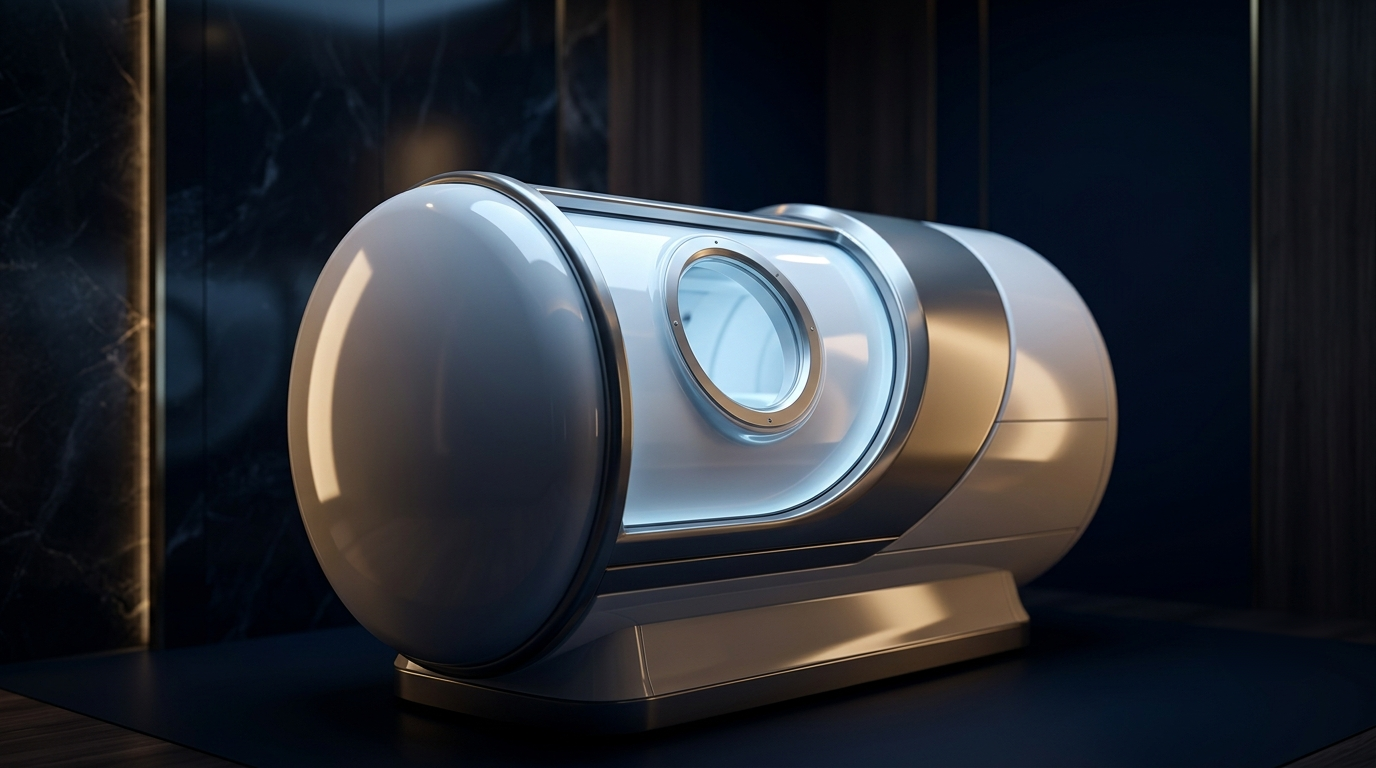
Monoplace chambers are single-person tubes where you lie down while the entire chamber fills with oxygen. These are common in private sports medicine clinics and offer a more private treatment experience. If you prefer a quiet, individual setting, this is typically the option you will encounter.
Multiplace hyperbaric chambers
Multiplace chambers are larger rooms where several patients sit together. Oxygen is delivered through individual masks or hoods. An attendant can be present inside the chamber, which some patients find reassuring. These are more common in hospital settings.
What to expect during an HBOT session for sports recovery
A typical HBOT session lasts 90 to 120 minutes. Here is what happens from start to finish.
- Before the session: You will wear cotton clothing and remove items like watches, phones, and jewelry. Staff will review any medications you are taking.
- Pressurization phase: As pressure increases, you may feel fullness in your ears similar to descending in an airplane. Swallowing or yawning helps equalize the pressure.
- Treatment phase: Once at treatment pressure, you breathe normally. Many patients read, listen to music, or rest during this time.
- Depressurization phase: Pressure returns to normal gradually over several minutes.
- After the session: Most people feel normal immediately afterward. Some experience mild fatigue or temporary changes in vision that resolve within hours.
The experience is generally comfortable. You are simply lying or sitting in a chamber, breathing, and letting the oxygen do its work.
How many HBOT sessions athletes need to recover
Treatment frequency depends on injury type, severity, and recovery goals. Acute injuries may require 5 to 10 sessions over one to two weeks. Chronic conditions often benefit from longer protocols of 20 to 40 sessions.
A treatment plan is typically determined after clinical evaluation. Your provider will assess the injury, review your training schedule, and recommend a protocol based on your specific situation. There is no one-size-fits-all answer here.
Safety, risks, and contraindications of HBOT for athletes
HBOT is generally well-tolerated, though it does carry some precautions worth knowing about.
- Common side effects: Ear barotrauma (pressure-related ear discomfort), sinus pressure, and temporary myopia (nearsightedness) that resolves after treatment ends.
- Serious but rare risks: Oxygen toxicity can occur with prolonged exposure at high pressures. Pulmonary issues are uncommon but possible.
- Contraindications: Untreated pneumothorax (collapsed lung), certain chemotherapy medications, and severe claustrophobia may preclude HBOT use.
Your provider will screen for these conditions before beginning treatment. If you have concerns about any of these factors, bring them up during your initial consultation.
Pairing HBOT with other sports injury treatments
HBOT is often most effective as part of a comprehensive treatment plan rather than a standalone therapy. Combining HBOT with other modalities can address different aspects of an injury simultaneously.
Extracorporeal shockwave therapy for tendons and joints
Extracorporeal shockwave therapy (ESWT) uses mechanical waves to stimulate tissue repair. Both ESWT and HBOT promote angiogenesis (new blood vessel formation) and healing, making them complementary approaches for tendon and joint injuries.
Regenerative therapy and stem cell injections
Regenerative approaches provide biological material for repair while HBOT creates the optimal oxygen environment for those cells to function. The combination may enhance outcomes for joint injuries and osteoarthritis.
Spinal decompression for back and nerve recovery
Athletes with spine-related injuries, including disc herniations and nerve compression, may benefit from combining decompression therapy with HBOT. Decompression addresses the mechanical cause while HBOT supports tissue healing.
Frequently asked questions about HBOT for sports injuries
Is a hyperbaric chamber good for athletes?
Yes. HBOT supports faster recovery from training and injuries by increasing oxygen delivery to muscles and tissues. Many professional athletes use it as part of their recovery protocols.
Does Tom Brady use HBOT for recovery?
Tom Brady has publicly discussed using hyperbaric oxygen therapy as part of his extensive recovery and longevity regimen throughout his career.
Do NBA players use hyperbaric chambers?
Several NBA players have used hyperbaric chambers for injury recovery and performance optimization. Some teams provide access to chambers at their training facilities.
How often should athletes use a hyperbaric chamber?
Treatment frequency varies by individual need and injury status. During acute recovery, athletes may use HBOT multiple times per week. Maintenance sessions are typically less frequent. A qualified provider determines the appropriate protocol.
Can HBOT help with post-surgical sports rehabilitation?
HBOT may support surgical recovery by promoting wound healing, reducing post-operative swelling, and delivering oxygen to tissues affected by surgical trauma.
How much does HBOT cost for sports injury treatment?
Cost varies by location, facility type, and number of sessions required. Insurance coverage depends on the indication, as some uses are considered off-label. Contact providers directly for pricing information.
Get personalized sports injury recovery care at 90210doc
At 90210doc, we create individualized treatment plans for sports injuries based on a thorough biomechanical assessment. Our whole-body approach recognizes that mechanical dysfunction in one area often affects other regions, and we focus on addressing root causes rather than symptoms alone.
Our Beverly Hills clinic offers advanced therapies including extracorporeal shockwave therapy, regenerative therapy, and spinal decompression that complement recovery protocols. Dr. Amin Javid brings expertise in human biomechanics and a track record of helping athletes and active individuals return to the activities they value.
explore hyperbaric therapy options for injuries
