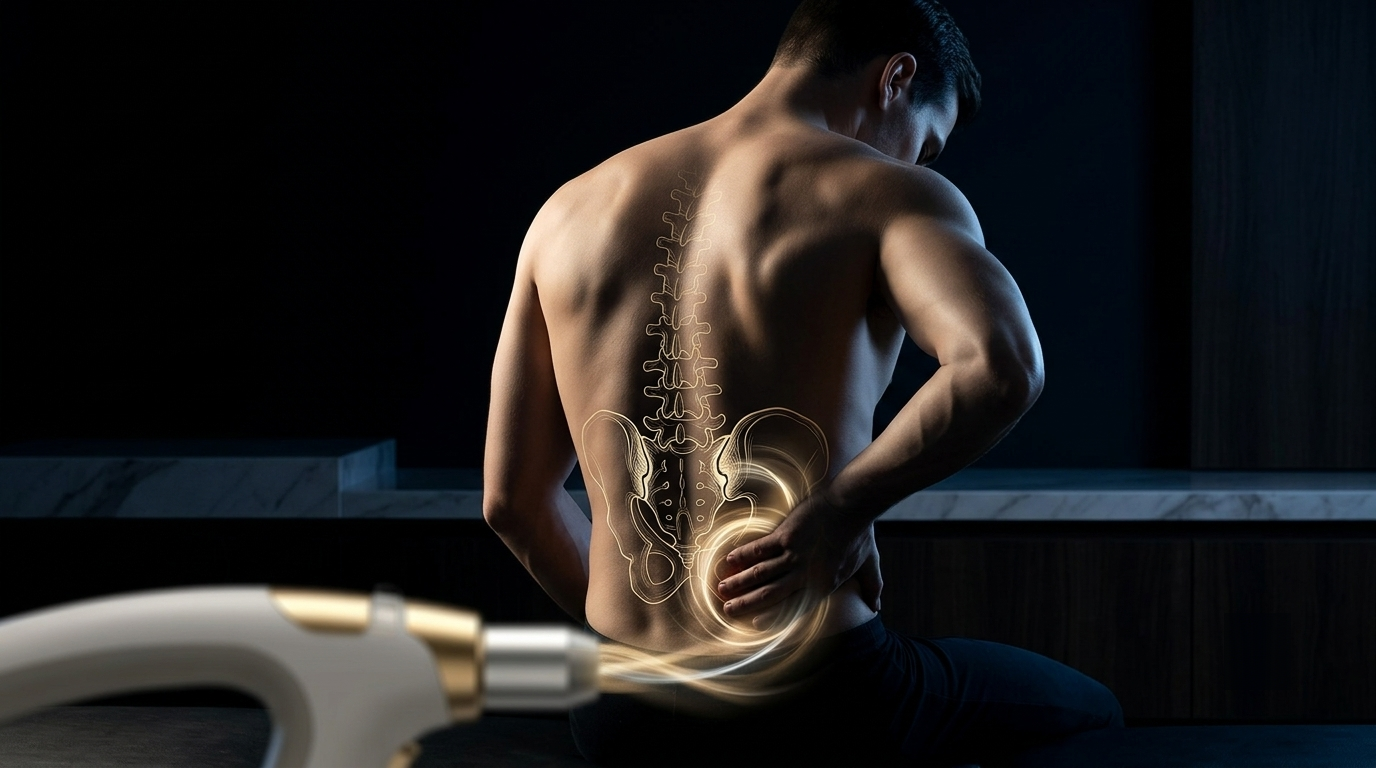
Chronic lower back pain that hasn’t responded to physical therapy or medications puts you in a difficult position: keep managing symptoms, or consider surgery. Platelet-rich plasma therapy sits between those options, using concentrated growth factors from your own blood to repair damaged spinal tissue rather than simply mask the pain.
This article covers how PRP injections work in the lumbar spine, which conditions respond best, what the procedure involves, and how it compares to cortisone, spinal decompression, and surgery.
What is platelet-rich plasma therapy?
Platelet-rich plasma therapy is a regenerative procedure that uses your own blood’s healing properties to treat chronic lower back pain. During an outpatient visit, a physician draws blood from your arm, spins it in a centrifuge to isolate the platelets, and then injects the concentrated plasma into the affected area of your spine.
So what exactly are platelets? They’re tiny cell fragments in your blood that help with clotting when you get a cut. But platelets also carry proteins called growth factors, which tell your body to start repairing damaged tissue.
When blood gets spun in a centrifuge, the platelets separate from red blood cells and other components. The result is plasma with a much higher concentration of platelets than normal blood. That concentrated mixture is what goes into the injection.
How PRP heals damaged tissue in the lumbar spine
Once the concentrated platelets reach damaged tissue, they activate and release growth factors. Think of growth factors as chemical messengers that tell your body’s repair cells where to go and what to do.
In the lumbar spine, this repair process works on several levels:
- Growth factor release: Platelets contain proteins like PDGF and TGF-beta that stimulate cell growth in damaged disc and ligament tissue
- Inflammation reduction: The injection helps calm the chronic low-grade inflammation that often accompanies disc degeneration
- Collagen production: Growth factors encourage repair of the disc’s outer layer (called the annulus) and surrounding ligaments
- Stem cell recruitment: Chemical signals draw your body’s repair cells to the injection site
The goal here is actual tissue repair. Cortisone injections, by comparison, reduce inflammation temporarily but don’t address the underlying damage. PRP attempts to heal the structure itself.
Lower back conditions treated with PRP injections
PRP works best when there’s a specific anatomical source of pain. The injection site depends entirely on which structure is generating your symptoms, which is why getting an accurate diagnosis first matters so much.
Discogenic low back pain and degenerative disc disease
Discogenic pain comes from damaged intervertebral discs, the cushions between your vertebrae. As discs degenerate over time, they lose water content, develop small tears in the outer annulus, and lose height. PRP injected directly into the disc aims to repair annular tears and slow the degenerative process.
Facet joint dysfunction
Facet joints are small joints on the back of your spine that connect one vertebra to the next. They allow your spine to bend and twist. When cartilage in facet joints wears down, the result is localized back pain that typically gets worse when you arch backward. PRP can target cartilage degeneration within facet joints.
Sacroiliac joint pain
The sacroiliac joint (often called the SI joint) connects your spine to your pelvis. When this joint becomes inflamed or unstable, it causes lower back and buttock pain. PRP targets ligament laxity and inflammation in the SI joint area.
Lumbar radiculopathy and sciatica
PRP’s role in treating sciatica is more limited. When nerve compression results from disc pathology, PRP may help repair the disc itself. However, mechanical nerve compression often responds better to treatments like spinal decompression, which relieves pressure on the nerve directly.
Where PRP is injected in the lower back
The injection location depends on where your pain originates. Physicians use image guidance (fluoroscopy or ultrasound) to see the spine in real time and place the needle precisely.
Intradiscal PRP injections
For discogenic pain, the needle goes directly into the disc nucleus or the outer annulus. This approach targets tears and degeneration within the disc itself.
Epidural PRP injections
Some physicians inject PRP into the epidural space, the area around spinal nerves. This application is less common and still being studied.
Facet joint PRP injections
For facet-related pain, the injection goes into or around the facet joint capsule. This targets joint arthritis and inflammation of the capsule surrounding the joint.
Sacroiliac joint PRP injections
For SI joint pain, the injection goes into the joint itself or the surrounding ligaments. This addresses joint instability and ligament damage.
What the clinical evidence says about PRP for low back pain
A 2023 systematic review published in PMC examined the available research on PRP for chronic low back pain. The authors found that PRP offers a less invasive and safe alternative to surgery, with consistent evidence supporting its use for discogenic pain specifically.
That said, the evidence is still developing. Controlled trials remain limited, and results vary depending on the condition being treated. Discogenic pain appears to respond more reliably than other pain sources.
Patient experiences online are mixed. Some people report substantial relief, while others notice little change. This variability often reflects differences in diagnosis accuracy, injection technique, and individual healing capacity.
PRP compared to cortisone, spinal decompression, and lumbar surgery
When considering PRP, most patients want to know how it stacks up against other options. Each treatment works differently and fits different situations.
PRP vs cortisone injections
Cortisone reduces inflammation temporarily but doesn’t repair tissue. PRP aims for actual healing. Another consideration: repeated cortisone injections may weaken tissue over time, while PRP attempts to strengthen it.
Treating the whole body is solely dependent upon having an intimate understanding of each of its individual parts. Mechanical dysfunction of non-traumatic origin is practically certain to cause — or be caused by — dysfunction in another region.
— Dr. Amin JavidPRP vs spinal decompression therapy
Spinal decompression addresses mechanical nerve compression and promotes imbibition, the process by which discs rehydrate when negative pressure is applied. PRP addresses tissue damage at the cellular level. In many cases, these treatments complement each other rather than compete.
PRP vs lumbar surgery
Surgery like fusion or discectomy is appropriate for severe structural problems that haven’t responded to conservative care. PRP offers an option for patients wanting to avoid or delay surgery. Surgery also carries longer recovery time and higher complication risk.
What to expect during a PRP lower back injection
The entire procedure takes 30 to 60 minutes and is done outpatient. You go home the same day.
1. Blood draw and platelet concentration
First, blood is drawn from your arm, similar to a routine lab draw. The sample goes into a centrifuge that spins for 15 to 20 minutes, separating platelet-rich plasma from other blood components.
2. Image-guided injection into the target tissue
Next, the physician uses fluoroscopy or ultrasound to visualize your spine and guide the needle to the exact location. Once positioned correctly, the concentrated platelets are delivered directly to the damaged tissue.
3. Post-procedure monitoring and discharge
After a brief monitoring period, you receive instructions about activity modification and head home.
Recovery timeline after PRP for lower back pain
Expect some soreness at the injection site for several days. This is actually part of the healing process, as PRP initiates an inflammatory response that triggers tissue repair.
Pain relief develops gradually over weeks as tissue heals. Full benefit may take several months. This timeline differs from cortisone, which often provides immediate but temporary relief.
Some patients require multiple sessions spaced several weeks apart. The number depends on condition severity and how your body responds.
Risks and side effects of PRP injections
Because PRP uses your own blood (making it autologous), allergic reaction or rejection is unlikely. The procedure carries a low overall risk profile.
Minor, temporary side effects include localized soreness at the injection site, mild swelling, bruising, and a temporary increase in pain before improvement begins. Serious complications are rare. Infection risk exists with any injection but is minimized with sterile technique.
Who is a candidate for PRP lower back treatment
Ideal candidates have chronic lower back pain from disc degeneration, facet arthritis, or ligament injury. They’ve typically tried initial conservative treatments like physical therapy and medications without adequate relief, but want to avoid surgery.
Proper diagnostic workup is required to identify the pain source. PRP works best when there’s a clear structural target for the injection.
People who may not benefit include those with active infection, blood disorders, certain medications that affect platelet function, or pain without an identifiable structural cause.
Non-surgical lower back care at Beverly Hills Spine and Rehabilitation
Dr. Amin Javid emphasizes identifying the root cause of pain through comprehensive evaluation before recommending any treatment. Mechanical dysfunction in one region often causes or results from dysfunction elsewhere, so the diagnostic process examines the whole picture.
Regenerative therapy is one component of broader treatment options that include spinal decompression, shockwave therapy, and rehabilitation. Image-guided precision ensures accurate injection placement when regenerative treatments are appropriate.
Learn more about lower back pain treatment
Frequently asked questions about PRP for lower back pain
How much does PRP for lower back pain cost?
PRP injections for the lower back typically range from $500 to $2,500 per session, depending on the clinic and geographic location.
Does insurance cover PRP injections for the lower back?
Most insurance providers classify PRP as an experimental or investigational treatment, so coverage is uncommon. Patients typically pay out of pocket.
How many PRP sessions are needed for lower back pain?
The number of sessions varies by condition severity and patient response. Physicians often recommend an initial treatment with possible follow-up injections spaced several weeks apart.
How does PRP differ from stem cell therapy for the spine?
PRP uses concentrated platelets from your blood to release growth factors. Stem cell therapy uses actual stem cells, typically from bone marrow, adipose tissue, or umbilical cord, that can differentiate into new tissue cells.
