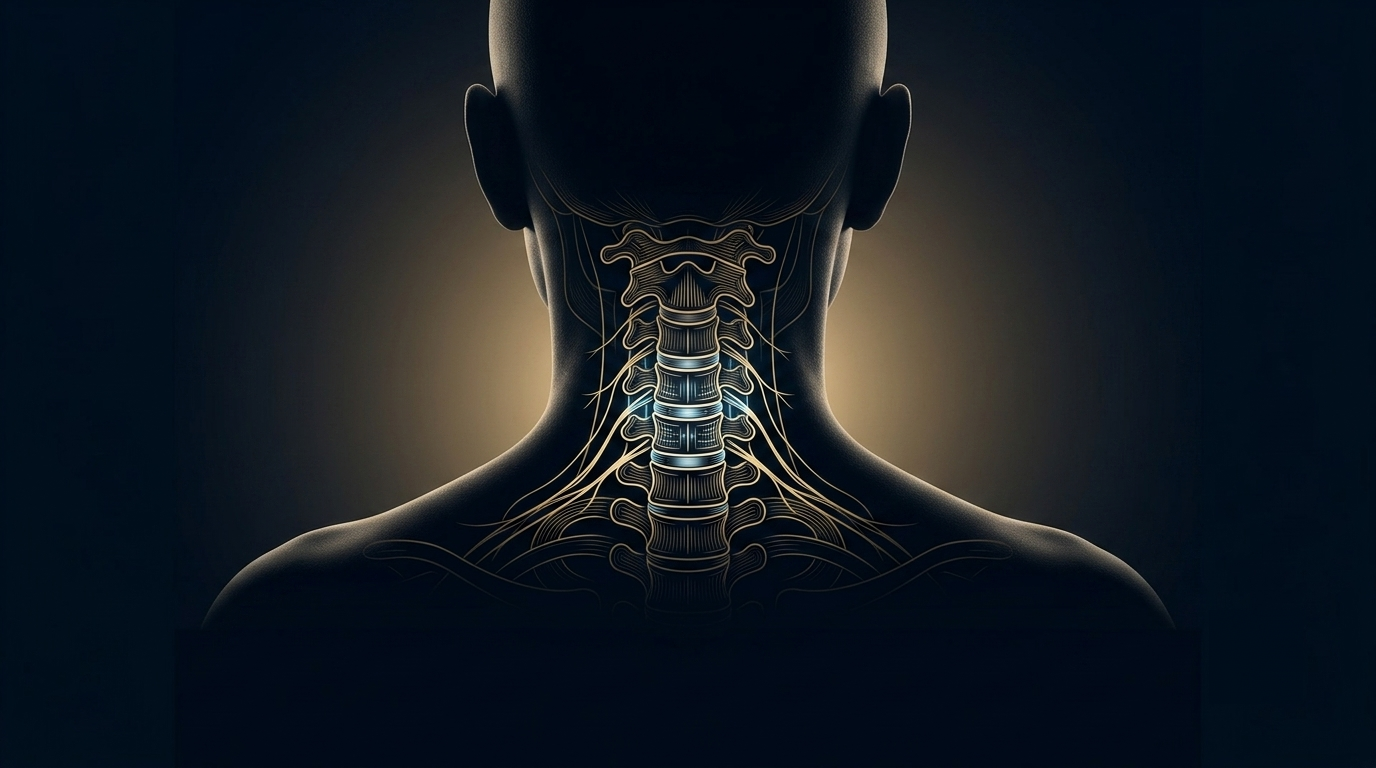
Neck pain that radiates into your shoulder or sends numbness down your arm often points to a compressed nerve in your cervical spine. When a disc bulges or herniates, it can press on nerve roots and create symptoms that medication alone cannot fix.
Cervical decompression therapy uses controlled traction to gently stretch the neck, creating negative pressure that draws disc material away from irritated nerves and pulls healing nutrients back into damaged tissue. This article covers how the treatment works, which conditions respond to it, and what to expect if you pursue it.
What is cervical spinal decompression therapy
Cervical decompression therapy is a non-surgical treatment that gently stretches the neck to relieve pressure on compressed nerves and spinal discs. You lie on a motorized table while a computerized system applies controlled traction to your cervical spine. This stretching creates negative pressure inside the disc, producing a vacuum effect that draws bulging disc material back toward the center and pulls in fluids and nutrients that help the disc heal.
The goal here is to fix the mechanical problem causing your pain, not just cover it up with medication. When a disc in your neck bulges or herniates, it can press on nerve roots and trigger pain that shoots down your arm, or numbness in your fingers. Decompression works by taking pressure off those structures.
This is different from surgical decompression, where a surgeon physically removes bone or disc material. Non-surgical decompression is typically the first option for people who want to avoid surgery and its associated recovery time.
How cervical decompression relieves neck pain
Pain relief from cervical decompression happens through a few specific mechanical changes. Understanding how each one works helps explain why the treatment helps certain conditions.
Reducing cervical disc pressure
During each session, the table applies intermittent traction, cycling between stretching and relaxation. This creates space between your vertebrae, which takes load off the disc. With less compression, bulging disc tissue has room to shift away from the nerve structures it was irritating.
Restoring disc hydration through imbibition
Your spinal discs do not have their own blood supply. Instead, they absorb water, oxygen, and nutrients from surrounding tissues through a process called imbibition. Think of it like a sponge soaking up liquid when you release pressure on it.
The negative pressure created during decompression enhances this process. As the disc space opens, fluids get drawn back into dehydrated or damaged disc tissue. Over time, this supports repair and can restore some of the disc’s natural cushioning.
Relieving nerve root compression
When disc material retracts, it reduces pressure on the cervical nerve roots that branch off your spinal cord. This matters most for people with radiculopathy, a condition where nerve compression causes symptoms like:
- Radiating arm pain: Often described as shooting or burning, traveling from the neck into the shoulder, arm, or hand
- Numbness or tingling: Commonly felt in specific fingers depending on which nerve root is affected
- Weakness: Difficulty gripping objects or lifting the arm
By addressing the mechanical compression, decompression therapy can reduce or eliminate these radiating symptoms.
Conditions treated by cervical decompression therapy
Cervical decompression works best for conditions where disc problems are the primary issue. Not every type of neck pain responds to this treatment, which is why accurate diagnosis comes first.
Herniated and bulging cervical discs
A herniated disc happens when the soft inner material of a spinal disc pushes through a tear in the tougher outer layer. A bulging disc extends beyond its normal boundary without rupturing. Both can compress nearby nerves. Decompression creates space for the disc material to retract, reducing that compression.
Cervical radiculopathy and pinched nerves
Radiculopathy is nerve root irritation that causes symptoms along the nerve’s pathway. In the cervical spine, this typically means pain, numbness, or weakness traveling from your neck into your shoulder, arm, or hand. The specific pattern depends on which nerve root is affected.
Cervical degenerative disc disease
As discs age, they lose water content and height. This degeneration can cause stiffness and pain. Decompression supports disc rehydration through imbibition, which may slow the degenerative process and reduce discomfort.
Cervical spinal stenosis
Stenosis refers to narrowing of the spinal canal. For mild to moderate cases, decompression can create additional space and reduce symptoms. Severe stenosis often requires surgical intervention.
Cervicogenic headaches
Some headaches originate from the cervical spine rather than the head itself. When neck dysfunction contributes to headache patterns, relieving cervical compression can reduce headache frequency.
Pros of cervical spinal decompression
Non-surgical and non-invasive treatment
There are no incisions, no anesthesia, and no hospital stay. You simply lie on a table while the machine applies traction. This makes the treatment accessible to people who cannot undergo surgery or prefer to avoid it.
Minimal side effects and low complication risk
Most patients experience no adverse effects. Some report mild soreness after the first few sessions, similar to what you might feel after trying a new exercise. This typically resolves within a day.
No downtime between sessions
You can return to your normal activities immediately after each session. There is no recovery period, so treatment fits into a regular schedule without major disruption.
Addresses the underlying cause of nerve compression
Pain medications temporarily block pain signals. Decompression therapy targets the mechanical problem creating those signals. This root-cause approach aims for lasting relief rather than ongoing symptom management.
Cons and limitations of cervical decompression
Results vary between patients
Response to treatment depends on several factors: the specific condition, symptom duration, disc health, and overall physical condition. Some patients experience lasting relief after completing treatment. Others have partial improvement or benefit from periodic maintenance sessions.
Requires multiple sessions over several weeks
This is not a one-visit solution. A typical protocol involves multiple sessions spread over several weeks. Each session builds on the previous one, so consistency matters.
Not appropriate for every cervical condition
Certain conditions are contraindications for cervical decompression:
- Spinal fractures
- Spinal tumors
- Severe osteoporosis
- Spinal hardware from previous surgery
- Pregnancy
- Severe spinal instability
A thorough evaluation, including imaging review, determines whether you are an appropriate candidate.
Who is a good candidate for cervical decompression therapy
The ideal candidate has disc-related neck pain or nerve compression symptoms and wants to pursue conservative treatment before considering surgery. Good candidates typically have a diagnosed herniated, bulging, or degenerative cervical disc, along with neck pain that may or may not include radiating arm symptoms.
If your symptoms have not fully resolved with rest, medication, or physical therapy alone, decompression may be worth exploring. An MRI helps confirm the diagnosis and rule out conditions that would make decompression inappropriate.
What to expect during a cervical decompression session
Step 1. Diagnostic evaluation and imaging review
Before your first session, you will have a comprehensive assessment. This includes your medical history, a physical examination, and review of any existing imaging. The goal is to confirm that your condition is appropriate for decompression and to identify the specific disc levels involved.
Treating the whole body is solely dependent upon having an intimate understanding of each of its individual parts. Mechanical dysfunction of non-traumatic origin is practically certain to cause — or be caused by — dysfunction in another region.
— Dr. Amin JavidStep 2. Positioning on the cervical decompression table
You lie face-up on a motorized table with your head secured in a cushioned cervical cradle. The positioning is comfortable, and the cradle keeps your neck properly aligned during treatment.
Step 3. Controlled cervical traction cycles
The computerized system applies precise, intermittent traction to your cervical spine. You will feel a gentle stretching sensation. The machine cycles between traction and relaxation phases. Most patients find the experience relaxing.
Step 4. Post-session guidance and home care
After each session, you can walk out and continue your day. Your provider may recommend supportive exercises or postural modifications to enhance your results.
| Session Detail |
What to Expect |
|
Duration |
15–30 minutes per session |
| Frequency |
Multiple sessions per week initially |
| Total treatment |
Several weeks depending on condition |
| Sensation |
Gentle stretching; most patients feel no pain |
| Recovery |
No downtime; resume daily activities immediately |
Cervical decompression versus cervical spine surgery
Non-surgical decompression is typically tried first for appropriate candidates. Surgery becomes an option when conservative care fails or when neurological deficits are progressing.
Surgical procedures like laminectomy, discectomy, or fusion physically remove bone or disc material pressing on neural structures. These procedures work for severe cases but involve anesthesia, incisions, and weeks to months of recovery.
|
Factor |
Non-Surgical Decompression | Surgical Decompression |
| Invasiveness | No incisions |
Requires anesthesia and incisions |
| Recovery time | No downtime |
Weeks to months |
| When indicated | Disc-related pain without severe neurological deficit |
Severe compression, failed conservative care, progressive weakness |
Exhausting conservative options before surgery makes sense when medically appropriate. However, some conditions require surgical intervention, and delaying necessary surgery can lead to worse outcomes.
Recovery timeline and expected outcomes for cervical decompression
Many patients notice some improvement within the first several sessions, though lasting results typically require completing the full treatment protocol. The timeline varies based on your specific condition and how long you have been symptomatic.
After completing initial treatment, some patients benefit from periodic maintenance sessions. Others find that improvements hold without ongoing care. Your provider can help determine what makes sense for your situation.
Finding expert cervical decompression care in Beverly Hills
The quality of your outcome depends partly on the quality of your evaluation. A provider who performs thorough diagnostic assessment before treatment can identify the specific cause of your symptoms and determine whether decompression is appropriate.
Look for a practice that uses advanced decompression equipment and takes a root-cause approach. Understanding how dysfunction in one region of the spine affects other areas helps create a more complete treatment plan.
Learn more about decompression therapy services
FAQs about cervical decompression therapy
How can I decompress my cervical spine at home?
Gentle stretches and postural adjustments may provide temporary relief, but clinical cervical decompression uses specialized equipment to create controlled negative pressure that cannot be replicated at home. Home exercises can complement professional treatment but typically cannot replace it for disc-related conditions.
Is cervical decompression therapy safe for long-term use?
Non-surgical cervical decompression has a favorable safety profile and can be repeated as needed. Some patients benefit from periodic maintenance sessions over time.
How many cervical decompression sessions are typically needed?
Treatment protocols vary by condition, but most involve multiple sessions spread over several weeks. Your provider determines the appropriate plan after evaluating your specific situation.
Does health insurance cover cervical decompression therapy?
Coverage varies by insurer and plan. Verifying your benefits with your insurance provider before beginning treatment helps you understand your financial responsibility.
Can cervical decompression therapy make a herniated disc worse?
When properly administered after appropriate screening, cervical decompression is unlikely to worsen a herniated disc. Thorough evaluation rules out contraindications that could increase risk.
