That dull ache in your lower back that sharpens when you bend over to tie your shoes? It might be a bulging disc pressing against structures it was never meant to touch.
The good news is that most bulging discs respond well to conservative treatment without surgery. This guide covers what’s actually happening in your spine, how to tell a bulging disc from a herniated one, and the full range of non-surgical therapies available, from physical therapy basics to advanced options like spinal decompression.
What is a bulging disc
Bulging disc therapy focuses on conservative care to relieve nerve pressure and strengthen the muscles that support your spine. Treatment typically combines physical therapy, activity modification, pain medication, and targeted exercises. Surgery is reserved as a last resort.
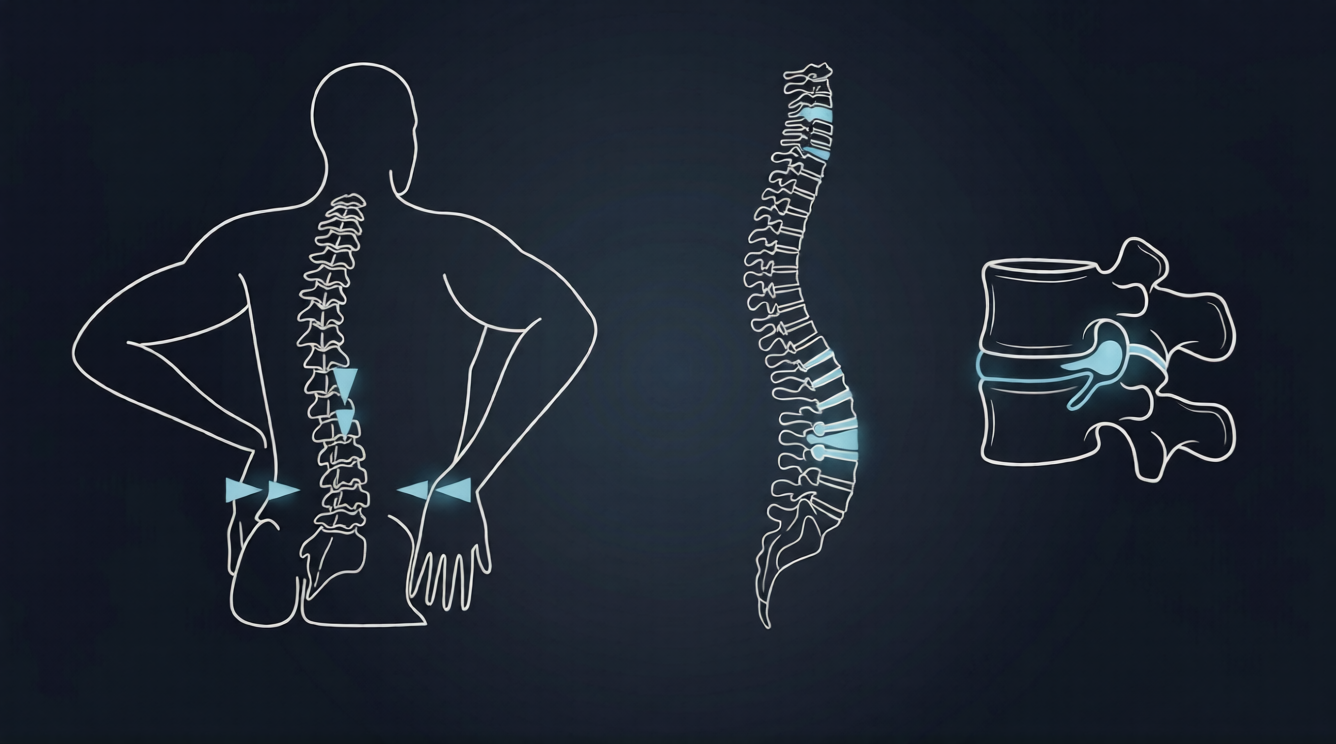
So what exactly is happening in your spine? A bulging disc occurs when the outer fibrous layer of a spinal disc (called the annulus fibrosus) extends beyond its normal boundary while the inner gel-like nucleus stays contained inside. Think of it like a hamburger where the patty is slightly too big for the bun, causing the edges to stick out, but nothing has actually broken through.
Your discs sit between each vertebra and work as shock absorbers. When one bulges outward, it can press against nearby nerves or simply cause localized discomfort in the area.
Bulging disc vs herniated disc
You’ll hear these two terms used interchangeably, but they describe different conditions. The distinction matters because treatment intensity and outlook can differ between them.
|
Feature |
Bulging Disc | Herniated Disc |
| Outer layer (annulus) | Intact but stretched |
Torn or ruptured |
| Inner nucleus | Contained |
Leaks through tear |
| Typical symptoms | May be asymptomatic or mild |
Often more severe nerve symptoms |
A bulging disc has an intact outer layer that protrudes outward. A herniated disc has a tear in that outer layer with nucleus material leaking through. If we go back to the hamburger analogy, a herniation is when the patty actually breaks through the bun.
Symptoms of a bulging disc in the lower back
Here’s something that surprises many patients: not all bulging discs cause pain. Symptoms depend largely on whether the disc contacts nerve tissue. Many people have bulging discs on imaging without any symptoms at all.
Localized lower back pain
The most common symptom is a dull, aching pain in the lumbar region. This pain typically worsens with bending, twisting, or prolonged sitting. You might also notice it increases after periods of inactivity, like first thing in the morning or after a long car ride.
Sciatica and radiating leg pain
When a disc bulge compresses nerve roots (particularly the sciatic nerve), you may feel sharp or burning pain that travels from the buttock down the back of the leg. This radiating pattern is what drives many people to finally seek treatment. The pain can feel electric, like a lightning bolt shooting down your leg.
Numbness, tingling, and muscle weakness
Nerve compression can also cause sensory changes and weakness in the leg or foot. You might notice your foot feels “asleep” or that you’re tripping more often.
Important: Progressive weakness or any changes in bladder or bowel function require immediate medical attention. These symptoms can indicate a more serious condition called cauda equina syndrome.
Causes and risk factors of a bulging disc
Understanding what caused your disc to bulge helps guide treatment and prevention. Mechanical dysfunction in one region of the body often connects to problems elsewhere, so identifying the root cause matters more than just treating the symptom.
Age-related disc degeneration
Discs naturally lose water content and flexibility over time, making them more susceptible to bulging. This is the most common underlying factor and explains why disc problems become more frequent after age 30. Your discs are about 80% water when you’re young, and that percentage drops as you age.
Repetitive strain and poor posture
Desk work, prolonged driving, and improper sitting posture stress discs over time. Repetitive bending or twisting movements compound this effect. If you spend eight hours a day hunched over a computer, your lumbar discs are under constant, uneven pressure.
Traumatic injury and heavy lifting
Acute injuries from sudden force, car accidents, falls, or lifting heavy objects with improper technique can cause immediate disc damage. Sometimes a single bad lift is all it takes.
Genetic and lifestyle risk factors
Family history of disc problems increases your risk. Other contributing factors include:
- Excess body weight that loads the spine
- Sedentary habits that weaken supporting muscles
- Smoking, which impairs the blood supply that keeps discs healthy
How a bulging disc is diagnosed
Accurate diagnosis comes before treatment. Symptoms alone don’t confirm a bulging disc because many conditions produce similar pain patterns. A thorough evaluation typically includes:
- Physical examination: Range of motion testing, palpation of the spine, and provocative tests that reproduce your symptoms
- Neurological assessment: Checking reflexes, sensation, and muscle strength to identify which nerve level may be affected
- Imaging studies: MRI is the gold standard for visualizing soft tissue like discs, while X-rays help rule out other conditions
The key is correlating imaging findings with your clinical presentation. A bulging disc on MRI that doesn’t match your symptoms may not be the actual pain source. This is why some people have “normal” MRIs but significant pain, while others have dramatic-looking scans but feel fine.
Non-surgical bulging disc therapy options
Conservative care is the first-line treatment for bulging discs and resolves symptoms for most patients. The goal is reducing inflammation, relieving nerve pressure, and building the muscular support your spine needs.
Physical therapy and corrective exercise
Physical therapy is the cornerstone of recovery. A therapist will build a program tailored to your specific condition, typically including:
- Core stabilization: Exercises like pelvic tilts, bird-dog, and planks help stabilize your spine
- McKenzie extension: Press-up movements (lying face down and gently pressing your upper body up while keeping hips on the ground) can shift disc material away from pinched nerves
- Flexibility work: Gentle stretching reduces muscle tension around the affected area
Certain movements make disc bulges worse. Sit-ups, Russian twists, toe touches with straight legs, and heavy deadlifts all compress the spine and can worsen the condition.
Chiropractic care and manual therapy
Spinal adjustments restore proper alignment, while soft tissue mobilization addresses the muscle tension that often accompanies disc problems. Manual therapy complements exercise-based rehabilitation, though treatment intensity varies based on your specific disc condition and symptom severity.
Treating the whole body is solely dependent upon having an intimate understanding of each of its individual parts. Mechanical dysfunction of non-traumatic origin is practically certain to cause — or be caused by — dysfunction in another region.
— Dr. Amin JavidActivity modification and postural correction
Prolonged bed rest actually stiffens joints and weakens muscles, so staying active with light movements like short walks on flat ground is preferable. Ergonomic adjustments to your workstation, proper sitting posture, and frequent position changes throughout the day all reduce ongoing stress on the disc.
Heat and cold therapy
During the first 48 hours after pain onset, apply ice packs for 15–20 minutes every two hours to reduce inflammation. After the initial inflammation subsides, gentle heat helps relax tight muscles and improve blood flow to the area.
Advanced non-surgical therapies for bulging disc pain
When standard conservative care provides insufficient relief, advanced non-surgical options can address the underlying mechanical dysfunction rather than simply masking symptoms with medication.
Spinal decompression therapy
This treatment uses specialized mechanical traction equipment to gently stretch the spine, creating negative pressure within discs. That negative pressure encourages retraction of bulging material and supports imbibition, the process by which discs absorb nutrients and fluid. Unlike pain medication, decompression addresses the disc itself rather than just dulling the pain signal.
Extracorporeal shockwave therapy
ESWT delivers high-energy mechanical waves to stimulate tissue healing, increase blood flow, and reduce inflammation in the musculoskeletal tissues surrounding the affected area. It’s particularly useful for chronic conditions that haven’t responded to other conservative treatments.
Regenerative therapy
Stem cell-based treatments aim to repair damaged tissue rather than temporarily mask pain. Image-guided precision ensures accurate placement of the regenerative material. This option appeals to patients seeking alternatives to repeated injections or surgery.
Hyperbaric oxygen therapy
Increased oxygen delivery under pressure supports tissue healing and may complement other therapies for disc-related conditions by improving the cellular environment around damaged structures.
Looking for advanced non-surgical options? Beverly Hills Spine & Rehabilitation offers spinal decompression, shockwave therapy, and regenerative treatments. Learn More
Medications and injections for bulging disc pain
Pharmacological options manage symptoms while other therapies address the underlying cause. They’re part of comprehensive care, not a standalone solution.
NSAIDs and muscle relaxers
Over-the-counter options like ibuprofen and naproxen control inflammation. Muscle relaxers may be prescribed when muscle spasms accompany disc pain, which is common because your body tries to “splint” the injured area.
Oral steroids
Short-term corticosteroid courses reduce significant inflammation during acute flare-ups. These aren’t intended for long-term management due to side effects with prolonged use.
Epidural steroid injections
When physical therapy and oral medications provide insufficient relief, injections deliver anti-inflammatory medication directly to the nerve root. This treats symptoms rather than the disc itself, but can provide a window for rehabilitation to take effect. Think of it as turning down the volume on pain so you can actually do your exercises.
When bulging disc surgery becomes necessary
Surgery is reserved as a last resort when conservative and advanced non-surgical treatments fail. Indications include:
- Progressive neurological deficits despite therapy
- Severe pain unresponsive to conservative care
- Loss of bladder or bowel control (which is an emergency)
- Significant weakness affecting daily function
Microdiscectomy
This minimally invasive procedure removes the portion of disc material pressing on the nerve through a smaller incision, allowing faster recovery than traditional open surgery.
Laminectomy
Removal of a portion of the vertebral bone (lamina) creates more space and relieves pressure on compressed nerves. It may be combined with discectomy depending on your anatomy and the extent of compression.
Bulging disc recovery timeline
Most patients improve with conservative care over weeks to months. Recovery depends on the severity of the bulge, whether nerves are involved, adherence to your therapy program, and whether underlying causes are addressed.
Structural changes may persist on imaging even after symptoms resolve. This is why clinical evaluation matters more than MRI findings alone. You can feel great while your MRI still shows a bulge, and that’s perfectly normal.
How to prevent a bulging disc from recurring
Prevention focuses on maintaining the gains you’ve made during recovery:
- Continue core stabilization exercises after symptoms resolve
- Use proper lifting mechanics (bend at knees, keep load close to body)
- Set up an ergonomic workspace with supportive seating
- Stay active with regular movement to prevent disc dehydration
- Maintain a healthy weight to reduce load on the lumbar spine
- Change positions frequently throughout the day
Find bulging disc therapy in Beverly Hills
At Beverly Hills Spine & Rehabilitation, we focus on identifying the root cause of your pain rather than chasing symptoms. Dr. Amin Javid’s expertise in biomechanics guides a whole-body diagnostic approach, and our practice offers advanced non-surgical options including spinal decompression, shockwave therapy, and regenerative treatments.
Learn More about disc therapy treatment
Frequently asked questions about bulging disc therapy
Can a bulging disc heal on its own?
Many bulging discs improve with conservative care as inflammation subsides and the body adapts, though the disc itself may not return to its original shape. Symptom resolution is the primary goal of therapy.
What activities should you avoid with a bulging disc?
Avoid movements that compress the spine or round the lower back, including sit-ups, toe touches, heavy lifting, and prolonged sitting without breaks. A spine specialist can provide individualized guidance based on your specific condition.
How many spinal decompression sessions are typically recommended?
The number of sessions varies based on the severity of the disc condition and individual response to treatment. A comprehensive evaluation helps determine an appropriate treatment plan.
Does health insurance cover non-surgical bulging disc therapy?
Coverage depends on the specific treatment and insurance plan, so patients typically verify benefits with their provider before beginning therapy. Many conservative treatments like physical therapy are commonly covered.
