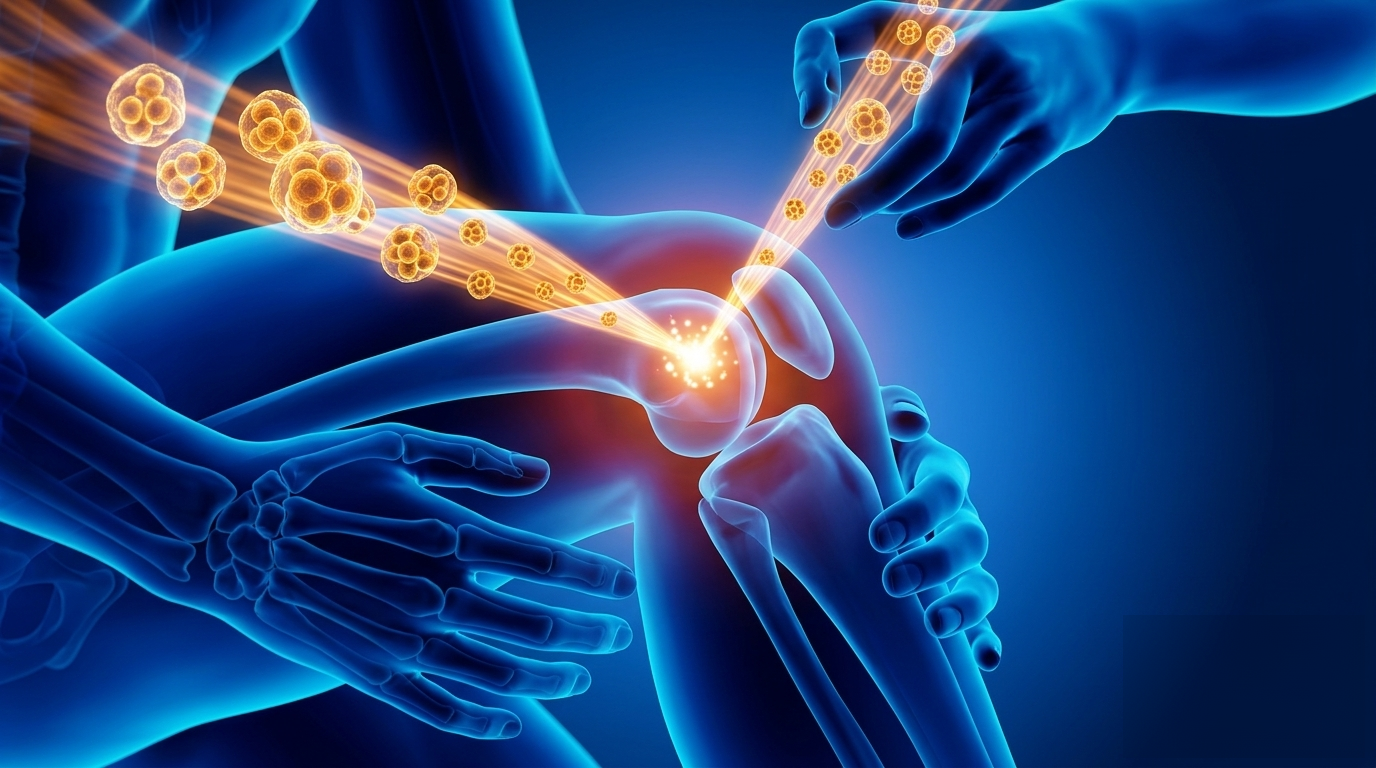
Joint pain that lingers despite physical therapy, medication, and cortisone injections leaves many patients wondering what options remain before surgery. Regenerative therapy offers a different path: using stem cells and growth factors to repair damaged tissue rather than temporarily mask symptoms.
Beverly Hills has become a destination for patients seeking advanced regenerative treatment, with clinics offering multiple stem cell sources and image-guided injection techniques. This guide covers how regenerative therapy works, the conditions it treats, what to expect during and after the procedure, and how to determine whether you’re a candidate.
What regenerative therapy is and how it works
Regenerative therapy uses biological materials, primarily stem cells and growth factors, to repair damaged tissues in joints, tendons, and other musculoskeletal structures. The goal is actual tissue healing rather than temporary symptom relief.
Stem cells are undifferentiated cells, meaning they haven’t yet become a specific tissue type. When concentrated and injected into an injured area, stem cells can develop into cartilage, tendon, or other specialized tissues depending on what the body requires. Along the way, stem cells release growth factors, which are proteins that signal repair processes and reduce inflammation.
This distinction matters when you’re weighing your options. A cortisone injection calms inflammation for weeks or months while the underlying damage remains unchanged. Regenerative therapy targets that underlying damage directly.
- Stem cells: Undifferentiated cells that can become cartilage, tendon, ligament, or bone tissue
- Growth factors: Proteins that reduce inflammation and signal tissue repair
- Tissue healing vs. symptom management: The aim is repairing damaged structures rather than masking pain
Advanced stem cell treatment options at Beverly Hills clinics
Beverly Hills clinics offer several biological sources for regenerative treatment. The choice depends on the condition being treated, patient preference, and clinical factors determined during evaluation.
Bone marrow derived stem cells
Bone marrow aspiration involves drawing a small sample from the patient’s hip bone under local anesthesia. This sample contains mesenchymal stem cells (MSCs), a type of adult stem cell that can differentiate into cartilage, bone, and connective tissue.
Because the cells come from your own body, there is no risk of rejection or disease transmission. The harvest site is typically sore for a few days afterward.
Adipose tissue derived stem cells
Fat tissue contains a high concentration of regenerative cells. Harvesting involves a mini-liposuction procedure, usually from the abdomen or flanks, performed under local anesthesia.
Some patients prefer adipose harvesting because the collection site tends to be less sensitive than the hip bone. The collected tissue is processed to isolate the stem cell fraction before injection.
Umbilical cord blood stem cells
Donor-derived stem cells from umbilical cord tissue offer an alternative for patients who prefer to avoid a harvesting procedure. Cord blood products are ethically sourced from consenting donors after healthy births, then processed, screened for safety, and cryopreserved.
Cord blood contains young stem cells, though the regulatory landscape for donor-derived products continues to evolve.
Platelet rich plasma and exosome therapy
Platelet-rich plasma (PRP) is concentrated from your own blood draw. Platelets contain growth factors that support tissue repair, and PRP can be used alone or combined with stem cell injections.
Exosomes are tiny vesicles released by cells that carry growth factors and signaling molecules. Exosome therapy delivers regenerative signals without transplanting whole cells. This approach is newer and still being studied for various applications.
Conditions treated with Beverly Hills stem cell therapy
Regenerative therapy addresses a range of joint and soft tissue conditions, particularly those involving degeneration or partial tears that haven’t responded to physical therapy, medication, or other conservative care.
Knee osteoarthritis and cartilage damage
Osteoarthritis occurs when the cartilage cushioning a joint wears down over time. The knee is one of the most common sites for regenerative treatment because cartilage has limited natural healing capacity once damaged.
Stem cell injections aim to support cartilage repair and reduce the inflammatory environment within the joint.
Hip joint degeneration
Hip arthritis and labral tears (damage to the ring of cartilage surrounding the hip socket) can cause groin pain, stiffness, and difficulty walking. Regenerative therapy offers a non-surgical option for patients with mild to moderate degeneration.
Rotator cuff and shoulder injuries
Partial rotator cuff tears, shoulder tendinopathy (chronic tendon irritation), and shoulder instability may respond to regenerative treatment. Complete tears typically require surgical repair, but partial tears and tendon degeneration are candidates for injection-based therapy.
Elbow, wrist, and hand tendinopathies
Tennis elbow, golfer’s elbow, and wrist tendon conditions often become chronic because tendons receive limited blood supply. Regenerative injections deliver growth factors directly to support healing in areas that struggle to heal on their own.
Cervical and lumbar disc conditions
Disc degeneration in the neck (cervical spine) or low back (lumbar spine) can cause local pain and nerve-related symptoms. While regenerative therapy for disc conditions is still evolving, some patients with early degeneration may benefit from targeted injections.
At 90210doc, Dr. Javid’s expertise in spinal biomechanics informs the evaluation of disc-related conditions. This helps determine whether regenerative therapy, spinal decompression, or a combination approach is most appropriate.
Foot and ankle injuries
Plantar fasciitis, Achilles tendinopathy, and ankle ligament injuries are common candidates for regenerative treatment, particularly when physical therapy and other conservative measures haven’t provided lasting relief.
Benefits of stem cell Beverly Hills regenerative care
Patients considering regenerative therapy often weigh it against surgery, long-term medication use, or repeated cortisone injections.
- Minimally invasive: The procedure involves injections rather than surgical incisions
- Outpatient treatment: Performed in-office without hospital admission or general anesthesia
- Tissue healing focus: Addresses underlying damage rather than temporarily masking symptoms
- Reduced medication dependence: May decrease the need for ongoing pain medication
- Potential surgery delay: Some patients with early to moderate joint damage may postpone or avoid joint replacement
Individual results depend on the severity of joint damage and commitment to post-procedure rehabilitation.
Who is a good candidate for regenerative therapy
The best outcomes typically occur in patients with mild to moderate degeneration who still have some healthy tissue remaining. Patients with severe, bone-on-bone arthritis may have limited benefit because there isn’t enough tissue substrate for regeneration.
Ideal candidates often share a few characteristics:
- Chronic joint pain that hasn’t improved adequately with physical therapy or medication
- Imaging (MRI or X-ray) showing joint degeneration or soft tissue damage
- Preference for non-surgical treatment options
- Willingness to follow a rehabilitation protocol after the procedure
A thorough evaluation, including imaging review and physical examination, determines candidacy. You might be a candidate for regenerative therapy even if you’ve been told surgery is your only option, or you might learn that a different approach would serve you better.
What to expect during a stem cell procedure
Understanding the treatment process helps reduce anxiety and set realistic expectations. The procedure typically involves four phases.
Step 1: Biomechanical evaluation and diagnostic imaging
The process begins with a comprehensive consultation. This includes a physical examination, review of existing imaging (MRI, X-ray), and assessment of movement patterns and joint mechanics.
At 90210doc, Dr. Javid’s background in biomechanics (the study of how the body’s structures move and bear load) informs this evaluation. Understanding the mechanical factors contributing to joint damage helps guide treatment planning.
Step 2: Cell harvest and preparation
If using your own cells (called autologous treatment), the next step is harvesting. Bone marrow aspiration or adipose tissue collection is performed under local anesthesia.
The collected sample is then processed using a centrifuge, a device that spins the sample to separate and concentrate the stem cells. This concentration step typically takes 15–30 minutes.
Treating the whole body is solely dependent upon having an intimate understanding of each of its individual parts. Mechanical dysfunction of non-traumatic origin is practically certain to cause — or be caused by — dysfunction in another region.
— Dr. Amin JavidStep 3: Image guided injection under ultrasound or fluoroscopy
Precise placement of the stem cell concentrate is essential. Ultrasound or fluoroscopy (real-time X-ray imaging) guides the injection to ensure the cells reach the target tissue.
This imaging guidance distinguishes clinical regenerative therapy from blind injections and improves accuracy considerably.
Step 4: Post procedure rehabilitation plan
Regenerative therapy doesn’t end with the injection. Patients receive a personalized rehabilitation protocol that includes activity modification, physical therapy exercises, and scheduled follow-up appointments.
Rehabilitation strengthens the muscles supporting the treated joint, enhances range of motion, and optimizes long-term outcomes. Think of the injection as planting seeds and rehabilitation as tending the garden.
Recovery, rehabilitation, and long term results
Recovery from regenerative therapy is generally straightforward, though patients can expect a gradual process rather than immediate relief.
|
Recovery Phase |
What to Expect |
|
Immediate (first few days) |
Rest, mild soreness at injection site |
|
Early recovery (weeks 1–4) |
Gradual increase in activity, begin physical therapy |
|
Ongoing rehabilitation (months 1–3) |
Strengthening exercises, periodic follow-up |
| Long-term (3+ months) |
Continued tissue remodeling, sustained improvement |
The timeline for noticing improvement varies. Some patients report reduced pain within weeks, while others experience gradual improvement over several months as tissue remodeling occurs.
Patients who engage actively in their recovery protocol tend to achieve better outcomes than those who skip rehabilitation.
Cost and insurance coverage for regenerative therapy in Beverly Hills
Regenerative therapy is typically considered elective and is not covered by most insurance plans. Patients pay out of pocket for the procedure.
Costs vary based on the source of cells used, the number of joints treated, and the specific clinic. Rather than providing a general estimate that may not apply to your situation, we encourage patients to schedule a consultation for specific pricing information.
Some patients find that the cost of regenerative therapy compares favorably to the cumulative expense of ongoing pain management, repeated injections, or the out-of-pocket costs associated with surgery and recovery time.
Why choose a Beverly Hills stem cell specialist
The quality of regenerative therapy depends heavily on the provider’s expertise and clinical approach. When evaluating specialists, a few factors matter:
- Physician training: Providers with specific training in musculoskeletal medicine and injection techniques
- Image guidance: Ultrasound or fluoroscopy-guided injections improve accuracy
- Comprehensive evaluation: Understanding the full picture of joint mechanics and contributing factors
- Rehabilitation integration: Treatment that includes a post-procedure plan, not just the injection itself
At 90210doc, regenerative therapy is part of a whole-body approach to musculoskeletal care. Dr. Javid’s expertise in human biomechanics, combined with his work as a nationally published medical illustrator, allows him to explain complex conditions clearly and develop treatment plans that address root causes.
The clinic also collaborates with orthopedic and spine specialists when appropriate, ensuring patients receive the most suitable treatment path for their specific condition.
Frequently asked questions about regenerative therapy in Beverly Hills
How does regenerative therapy compare with cortisone injections?
Cortisone injections reduce inflammation temporarily but do not promote tissue repair and may weaken tissues with repeated use. Regenerative therapy aims to stimulate actual healing of damaged tissue.
Is stem cell therapy FDA approved?
The FDA regulates stem cell products and has approved some specific applications, while others remain investigational. Patients can discuss the regulatory status of the specific treatment being recommended with their provider.
Can regenerative therapy help me avoid joint replacement surgery?
Some patients with early to moderate joint degeneration may delay or avoid surgery after regenerative treatment. Candidacy depends on the severity of joint damage and individual factors assessed during consultation.
How soon can I return to exercise after stem cell treatment?
Most patients begin light activity within a few days and gradually progress based on their rehabilitation protocol. Full return to exercise depends on the treated area and individual healing response.
Schedule regenerative therapy with 90210doc in Beverly Hills
Regenerative therapy offers a tissue-healing approach for patients with joint pain, arthritis, and soft tissue injuries who want alternatives to surgery or long-term medication use. At 90210doc, this treatment is part of a comprehensive clinical model that addresses the whole body through an understanding of its individual parts.
Dr. Amin Javid brings expertise in human biomechanics and a commitment to evidence-based care. The clinic’s state-of-the-art equipment and modern Beverly Hills setting provide a comfortable environment for treatment.
To learn whether regenerative therapy is appropriate for your condition, schedule a consultation at our Wilshire Boulevard office. You can reach us by phone at +1-310-438-6345 or by email at info@90210doc.com.
Learn More more about our Regenerative Therapy Treatment
